
I adore Paizo’s Adventure paths. They’re a huge timesaver for busy GMs, and not just those who want to run a long pre-written campaign! You can easily pull out interesting scenarios from the APs. After that, you can rub off a few serial numbers and slot them into your custom campaign with no one the wiser. I’ve written about this for other APs, and now it’s time for me to give Quest for the Frozen Flame the same treatment.
A bit of background
Frozen Flame is an awesome AP, but it’s not for everyone. It has a ton of wilderness exploration, and you’re deep in Book 2 before you see a town of any kind. The only bustling metropolis is in book 3, so if your group depends on friendly shops to gear up, they could be in trouble.
That said, having a bit of wilderness can be good for even the most city-bound campaign! It lets players experience something novel and test out skills that probably never get used if they get to retire to a comfortable bed every night. Frozen Flame has scores of scenarios that you can pick up and place in your own campaign with minimal fuss.
Book 1
The Hunt
This is a nice, small encounter for low-level players that encourages breaking out their skills, cooperating with each other, and planning ahead. Depending on how careful the players are, it could take up a good chunk of a session, and could be useful if you have players still figuring out PF2 rules.
Rockloom
This is another encounter that could take up a session or less of game time. The players are tasked with fixing a holy site, and doing so requires a combination of fighting, talking, and skill checks. This is a good encounter to teach new players that not everything needs to be hit with a stick in order to be dealt with.
Red Cat Cave
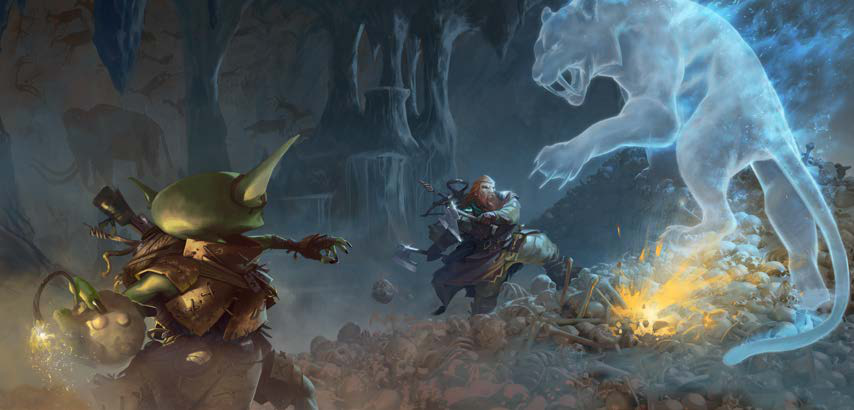
This is a small dungeon that could take a focused group one to two sessions. It’s another scenario that incorporates diverse encounters: Some are smackable, some are talkable, and there’s even a haunt! At the end, there’s a convenient place to do a data dump for your own encounter, since who knows what the Red Cat happens to know that the party could need?
Hex Maps
If you ask me for my opinion of Frozen Flame, one of the first things I’ll gush about are the hex maps. They’re honestly awesome, and made me want to do more hexploration. That said, the hex maps in this book are a bit sparse, but for good reason: The party in the book is being chased by another tribe who wants to wipe them out. There’s not a lot of time to chill out. If you use the book one hex maps, I’d recommend filling them out with campaign specific encounters. Alternatively, you could also leave them as is, but add your own pressure to the party. They could be chased, or they could also have a tight deadline to meet, like a celestial event (this works well if you still plan on using Red Cat Cave). Some other ideas: a meeting that needs to be intercepted, tracking another group that is slightly faster than you, or a natural disaster the group is trying to get ahead of.
Note: I recommend moving event K to a location in the path of the party, because it’s super easy to miss. Even my completionist crew missed it, and they rarely miss anything.
Pakano
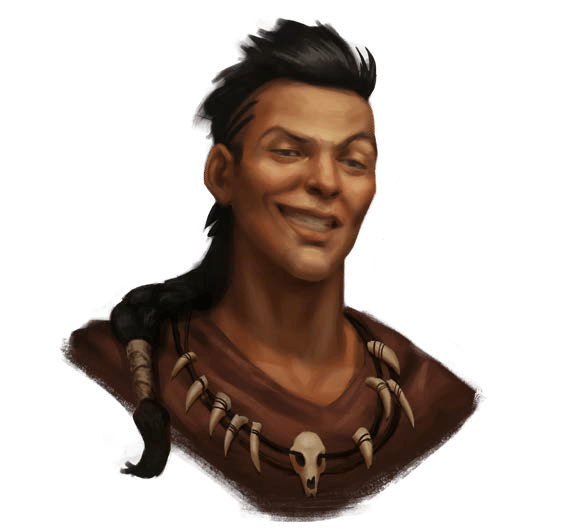
Is your campaign missing a low-level villain that will make your players rage out every time they think he might be close? Well, here you go. I’ve run many games for my crew, and I’ve never had them hate an NPC as much as they hated this little turd.
Book 2
Calamity Caves
This is a big cave system that could take several sessions to finish. It also has a twist: Rather than just trying to find your way through it, you have to clear a path big enough for a following to go through. In the AP, this is your following, but it could also be a caravan that’s contracted the party to get them to a location on the other side. You could also ignore this twist if your players are completionists who won’t leave a single part of the map dark.
As for the encounters, they’re a diverse collection of social interactions, animal handling, quite a bit of fighting, and some traps. There are a few encounters that are specific to Frozen Flame, but you can drop in your own plots fairly easily. It should be noted that the PCs could leave the caves with some cute baby animals that will grow up to be rather fierce, so keep that in mind as they go forward.
Hex Maps
Seriously, this book has what I consider to be the gold standard for hex maps. Yes, it’s small, but most of the hexes have multiple locations to explore. Some of the events are even linked to each other, so it feels more like an actual ecosystem rather than a series of random tables taped together. It’s built for thorough exploration, and could easily take many sessions to complete.
The overall goal is to find the town Lubya and its Galacial palace, but this could be replaced with a custom set piece for your campaign. Some of the events might have to be tweaked, but as long as your custom plot includes a jerk BBEG, you can probably just change names.
Lubya
Lubya is a town in trouble that could be anywhere that’s isolated, keeping the citizens in place rather than running off to find a better life in a nearby metropolis. It’s being run (controlled) by an evil dragon and his lackey, and the citizens are wary of any offers of help, lest they be a test by the duo. The goal is to win the trust of the locals and free them from the despots.
This scenario involves a fair number of skill challenges, social encounters, as well as some fights. A group could easily take two or three sessions to finish it, excluding the Glacial Palace dungeon.
Glacial Palace
The Glacial Palace is a mini-dungeon that’s technically attached to Lubya, but it could be placed anywhere. It doesn’t even need to be somewhere cold, since the ice dragon within is the one keeping it kept up. It’s main occupants are an evil ice dragon and his lackey, as well as a collection of undead and dragon-type creatures. The only creatures that might need to be replaced if you move the scenario from the Crown of the World are the Zombie Mammoths, but it’s not like Big Undead are hard to find in Pathfinder 2e.
Though small, it’s still a challenge for the group due to limitations on movement, a few interesting battle maps, and creatures who have the home team advantage.
Book 3
Hillcross
Hillcross is a location where tribes gather to bask in a magical spring for a time. Though not strictly defined as a ‘town’, it acts as a level 8 settlement. Technically, it’s the size of a small town, but due to tribes moving in and out all the time (and coming in prepared to trade), it mechanically acts much bigger than its population.
If your party isn’t gathering a following, they can still use the various tribes to gather information or favors in a custom campaign. There’s also a battle for Hillcross that kicks off after the PCs have had a chance to settle in and schmooze a bit. The battle gives an enthusiastic group a chance to act like Big Damn Heroes, and this time for an audience!
Hex Map
While the hex map for this book isn’t as packed as Book 2’s, it’s still quite good! It comes with a number of random tables based on hex that can make it feel fuller than it is. It also includes several encounters that range between places of calm and peace to blood and guts, so it has something for every type of player. Due to the way it’s set up, with one entrance and one exit, it could placed between the party and their goal. Even if the party beelines for the exit, they’ll be forced across multiple terrains, so will still have fun.
Castle Grimgorge
Grimgorge is a sizable dungeon, set in an abandoned castle that’s been taken over by demons, the undead, and a very punchable worm. It offers more than a few challenges, even with a seasoned party. My group, who normally curb stomps end bosses, actually struggled with the worm and his witch, but in a way that felt rewarding. The fights aren’t unfair, but they do reward a party that coordinates with each other and plans ahead.
Note: Some of the fights mention a cursed item that the party acquires during the plot of Frozen Flame. You can ignore those mentions, for the most part. Even with the artifact in hand during our game, it didn’t change outcomes much, and can become a punishing artifact for a party that hasn’t bought into the overall goal of Frozen Flame.
Final thoughts
If playing all of Frozen Flame isn’t for you, I still argue that you can rip many of the scenarios out and use them in almost any campaign. After all, even the most city-bound group has to travel, and Golarion is filled with nearly empty roads and stretches of untamed wilderness that should be filled with adventure.

