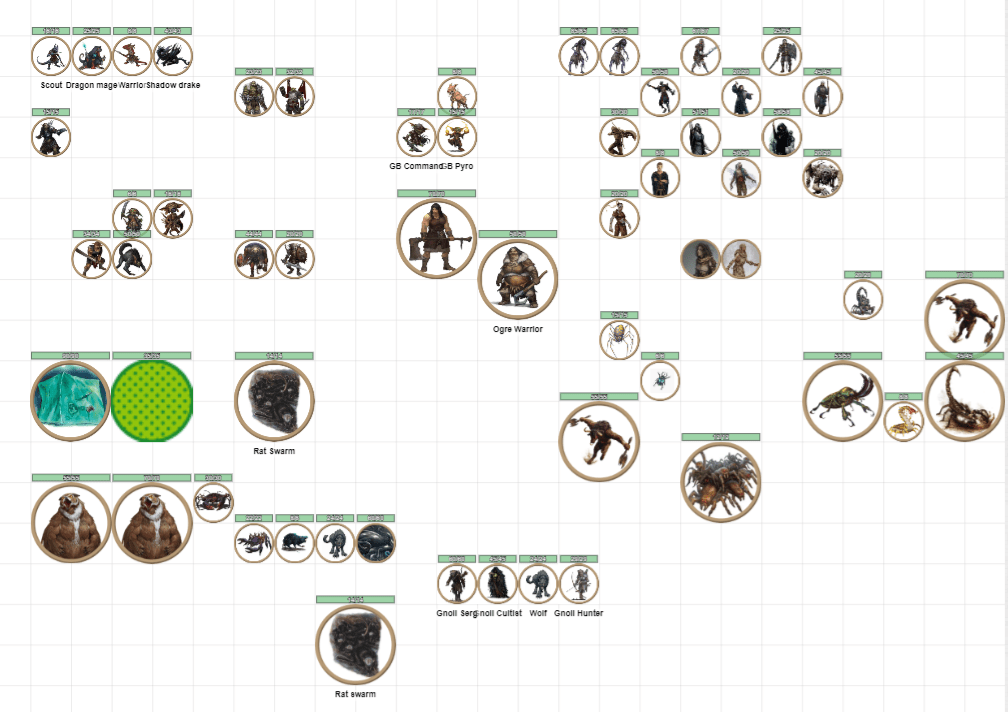
Caves of Chaos for PF2: The Creatures!

Way long ago, I wrote a blog post about revamping an adventure that was older than most of the players on our server: Caves of Chaos, from Keep on the Borderlands. One thing that post was missing was a specific breakout of what exactly I shoved in the caves. I figured I could get to that later, since I didn’t feel like deciphering my notes at the time. Well, a scant four years later, I’m finally getting around to that.

Look, I’m consistent. I’m not fast.

Background

This isn’t a republishing of the Keep on the Borderlands. You’ll still need to acquire the original book (available on DriveThruRPG or the Internet Archive) to see how the various caves interact, since some of them can repopulate others, some have allied with others, and some are at war. Also, it’s an interesting dive into RPG history!

I didn’t include any adjustments for the Keep part of the Keep on the Borderlands. That’s the part I feel can most easily be replaced by something campaign-specific (maybe you already have a keep you know about!) or adjusted for the flavor of your table. Heck, maybe the players don’t even want a keep, and are fine with roughing it in the nearby woods.

Each cave has been given a level, and each room in the cave has been given an encounter level. Encounters were built assuming a standard 4-person party. Keep in mind, though, that while caves get harder as they go further in, nothing is stopping the players from rushing to the other end of the valley and taking on the hardest caves first. If this is how your players roll… make sure they have back-up characters at camp.

Because of the cave system layout, players should be encouraged to scout caves to figure out what might be in there. Presumably, there’s detritus outside of the cave mouths that give a clue as to what might be inside. I include these for each cave, but it’s basically a hard-level DC for a Recall Knowledge to identify the specific creatures, or an at-level DC for Survival to identify the family.

Caves

Cave A: Hidden Kobold Lair

Information:

  • Level 1 cave
  • Find: DC 15 Perception
  • Scout: DC 15 Survival – Creatures from the Kobold family. Maybe a dozen?
  • Recall Knowledge: DC 17 Society – A clutch of kobolds reside here, preying on caravans as they pass.
  • In the hallway leading in, there’s a Hidden Pit trap.
RoomLevelCreature(s)Treasure?Notes
1Low3 Kobold Warriors
2Trivial1 Rat Swarm
3NoneDoor is locked with a poor lock. DC 15 to open
4Moderate2 Kobold Scouts
5Severe1 Kobold Mage
3 kobold Warriors
6Moderate5 Kobold Warriors

Cave B: Hidden Orc Lair

Information:

  • Level 2 cave
  • Find: DC 13 Perception
  • Scout: DC 16 Survival – Medium sized creatures, probably of the Orc family. Maybe a half-dozen?
  • Recall Knowledge: DC 18 Society – Orcs are near here. Not quite enough to be a warband, but still, a sizable number.
RoomLevelCreature(s)Treasure?Notes
7Trivial2 Orc Brutes
8Moderate2 Orc Warriors
9None
10NoneYes
11NoneYesLocked (simple): DC 20
12Severe1 Elite Orc Warchief
2 Orc Warriors
YesSecret door: DC 18 Perception

Cave C: The Other Orc Lair

Information:

  • Level 2 cave
  • Scout: DC 16 Survival – Medium sized creatures, probably of the Orc family. Maybe a dozen?
  • Recall Knowledge: DC 18 Society – Orcs are near here. The makings of a small warband.
RoomLevelCreature(s)Treasure?Notes
13NoneYesSecret door: DC 18 Percep
14Moderate2 Orc Brutes
2 Orc Warriors
15Low2 Orc Brutes
16Severe1 Elite Orc Warchief
2 Orc Warriors
1 Orc Brute
Yes

Cave D: Goblin Horde

Information:

  • Level 1 cave
  • Scout: DC 15 Survival – Creatures from the Goblin family. Maybe a dozen?
  • Recall Knowledge: DC 17 Society – At least a dozen goblins have holed up here.
RoomLevelCreature(s)Treasure?Notes
17Trivial2 Goblin WarriorsYes
18Trivial2 Goblin WarriorsYesA goblin can spend actions to get the Ogre in Room 22 to join them. This will turn the encounter from Trivial to Severe.
Secret door: DC 15 to notice
19Moderate1 Goblin Warrior
1 Goblin Commando
1 Goblin Pyro
Yes
20Severe1 Goblin War Chanter
1 Goblin Pyro
1 Goblin Commando
Yes
21Moderate4 Goblin WarriorsSecret door. DC 20 to notice (Level 1, very hard)

Hobgoblins in room 29 may come in, but not during combat.

Cave E: Ogre Cave

  • Level 3 cave
  • Scout: DC 18 Survival: A large creature lives near here. Probably an ogre?
  • Recall Knowledge: DC 20 Society: An Ogre Warrior lives in this cave.
RoomLevelCreature(s)Treasure?Notes
22Trivial1 Ogre WarriorYes

Cave F: Hobgoblin Tribe

  • Level 3 cave
  • Scout: DC 18 Survival: Hobgoblins live near here. Maybe two dozen?
  • Recall Knowledge: DC 20 Society: A large tribe of hobgoblins have set up here. There are signs that they have taken prisoners recently.
RoomLevelCreature(s)Treasure?Notes
23Moderate1 Hobgoblin Archer
2 Hobgoblin Soldiers
Yes
24Low3 Hobgoblin SoldiersThere is a reward back in town for rescuing the prisoners.
25Low2 Elite Hobgoblin SolidersYes
26Moderate2 Hobgoblin ArchersYes
27Moderate2 Elite Hobgoblin SolidersYes
28Trivial1 Hobgoblin SoliderYes
29Moderate1 Elite Hobgoblin Archer
2 Weak Hobgoblin Soliders
30Severe1 Hobgoblin General
2 Weak Hobgoblin Soldiers
Yes
31Moderate6 Weak Hobgoblin SolidersYes

Cave G: Clutch of owlbears

  • Level 3 cave
  • Scout: DC 18 Survival: There’s signs of owlbear scat. The air is weirdly moist. It doesn’t look like a large number of them live here.
  • Recall Knowledge: DC 20 Nature: This cave hosts a clutch of owlbears.
RoomLevelCreature(s)Treasure?Notes
32Low1 OwlbearTreasure
33ModerateGrey Ooze
2 Ooze Mephits
Treasure
34Severe2 Owlbears

Cave H: Bugbear Alley

  • Level 3 cave
  • Scout: DC 18 Survival: A tribe of creatures from the bugbear family have set up here. Less than a dozen.
  • Recall Knowledge: DC 20 Society: A tribe of bugbears have set up here to prey on caravans.
RoomLevelCreature(s)Treasure?Notes
35Low2 Weak Bugbear Thugs
36Severe1 Elite Bugbear Tormenter
1 Bugbear thug
Yes
37NoneYes
38Moderate2 Weak Bugbear Thugs
39Moderate2 Bugbear Thugs
40None
41None

Cave I: The Maze

  • Level 3 cave
  • Scout: DC 18 Survival: You see signs of creatures going in, but not coming out.
  • Recall Knowledge: DC 20 Nature: This cave is wild, and likely houses wildlife…
  • Recall Knowledge: DC 20 Society: …and something that likes twisty passages.
RoomLevelCreature(s)Treasure?Notes
42Low6 Bloodseekers
43Moderate2 Weak Stag Beetles
44Low3 Hunting Spiders
45Severe2 MinotaursYes

Cave J: Gnoll Cult

  • Level 3 cave
  • Scout: DC 18 Survival: A large number of bipedal creatures have set up here. Probably gnolls, around a dozen.
  • Recall Knowledge: DC 20 Society: There are markings around this cave. Gnolls live here, likely cultists.
RoomLevelCreature(s)Treasure?Notes
46Low2 Gnoll Hunters
47Moderate2 Gnoll Hunters
1 Gnoll Cultist
48NoneYesLocked with an Average Lock (DC 25)
49Moderate2 Gnoll Cultists
1 Weak Gnoll Hunter
50Severe1 Gnoll Sergent
1 Gnoll Cultist
2 Weak Gnoll Hunters
Yes

Cave K: Death Cult

  • Level 4 cave
  • Scout: DC 19 Survival: A number of humans reside here. So may no longer be alive… About two dozen.
  • Recall Knowledge: DC 21 Society: Lots of humans come and go from this location. A dropped locket hints at recent captives being taken inside.
  • Recall Knowledge: DC 21 Religion: The way some of these creatures move points towards there being undead in the cave.
RoomLevelCreature(s)Treasure?Notes
51None
52Moderate2 Skeletal Champions
53Moderate4 Zombie Brutes
54Low2 Corrupted Priests
55NoneGravehall trap, in the hallway leading out. Trigger upon messing with the shrine or removing items.
56Moderate3 Grioth Cultists
57Severe1 Zombie Lord
2 Shambler Troops
1 Dirge Piper
58LowHaunt: Entombed Spirit
59Severe2 Weak Priests of Kabriri
60None
61Moderate1 Elite Necromancer
62Moderate1 Wraith
63Moderate2 Elite Gelatinous Cubes
64Moderate1 Annis HagThe hag is disguised as one of the prisoners. She’s 50/50 on killing the heroes who just rescued her, since she could be their next target.

Final thoughts

Treasure. I don’t lay out specific treasure that can be found. The GM can sprinkle whatever the group needs most. If there’s a town nearby, they’ll want gold, but if they’re opting for more of a wilderness setting, then they’ll need gear. Also, it’s possible to strip the caves of treasure completely and have bounties set on each cleared cave.

Not everyone is ready to rumble. Keep an eye on the room descriptions. Guards, of course, are always ready to fight, but if they’re lounging around eating lunch and playing cards, NPCs need time to be alerted, grab their weapons, and get to the fight. This is very important when it comes to caves where the encounters are right on top of each other.

The Caves are fluid. I found most players cleared caves in one go, but if they fall back, keep in mind that the various groups have allied with each other. If you leave someone alive, they’ll combine with their allies, which changes the balance going forward.

I hope some of you try this out! It’s a really fun module to break out, especially since so much of the story comes from how the players react to the caves. It’s also an interesting piece of history that stands up surprisingly well to the test of time.
How I run it: Respecs

One awesome thing about playing in newer systems is that you always have new stuff to try out! This is also one of the terrible things.

When Pathfinder 2e only had one book, I co-ran a West Marches. It felt like every other month, we had a new supplement that added so many cool classes and ancestries and heritages. At first, allowing players to have more than one PC let people play around, but even that became an issue as players ran out of slots or didn’t want to manage yet another character sheet.

The GMs hesitated to let players retire characters left and right, because part of what makes game dynamics work is shared history. We didn’t want to lose half the town every time a new book came out. Sure, retraining exists, but it only goes so far and takes time. What could we do to make everyone happy?

Enter the Respec

What if there was a way to keep PC history and let people play something new? We didn’t want players changing things willy-nilly (so no swapping out every feat right before a game because you heard there’d be a red dragon), but surely once every few months wouldn’t be too unmanageable.

We started brainstorming. Here were some things we considered that were rejected:

  • Only allowing changes from the new book. This leads to too much accounting.
  • Only allowing a certain number of changes. Again, accounting. We would have to audit character sheets.
  • Only allowing one per player. When we came to our final system, this felt unnecessary.
  • Reset on gold and gear. PCs had a wide range of wealth, so this felt like it would punish our most active players.

I’m not saying that these were wrong decisions, only that they were wrong for us and our set-up.

Finally, we came up with what respecs would look like for us:

  • Your history stays the same. All your old experiences and relationships are a part of your character.
  • Your gear doesn’t change. If you need to buy new stuff, sell what you have and use your existing cash reserves.
  • You can change anything else on your sheet. Ancestry. Heritage. Background. Class. Feats. Spells. ANYTHING.
  • It’s up to the player to come up with the story. GMs can help but aren’t responsible for coming up with the idea themselves.
  • No downtime is necessary. It just happens. If you want to roleplay it taking a while, that’s perfectly fine, but the timeline is up to you.
  • Every PC gets one respec per book that includes significant changes. So, a Lost Omens book without a new class or ancestry might not count, but a book like Rage of Elements does.
  • You can’t stockpile respec points. It’s one or none.
  • You also don’t have to spend it right away. Feel free to hold onto it until the time is right.

The reaction was almost unanimously positive. Players got to try out new stuff, GMs weren’t overwhelmed, and town history stayed intact.

Metaplot

The biggest sticking point was explaining why these changes were happening. Some of the options we ended up using:

A Big Event. We put together a big event a few times that helped explain the sudden changes. Fey BS was a popular reason, but we also used disasters or other major events to explain the sudden shifts.

Reincarnate. The Reincarnate ritual was another option open for players, though with no rolling or money spent. They ‘die’ and are brought back in a weird new body with new ideas in their head.

A Clever Retcon. A few players opted for a clever retcon of their own story, like an Elf who realized he was an Android with implanted memories.

Fallout

Whenever I tell other GMs about this policy, they’re skeptical. It sounds like it would utterly wreck games and the immersion, so I must have dealt with a ton of fallout each time a new book came out. Except… I didn’t.

I won’t say it was a non-event, but players were game to accept the new reality around their fellow PCs and even enjoyed playing it up. Also, since major books aren’t realized too often, players were careful about spending that respec point. They would be stuck with it if they didn’t like what they ended up with.

What I did notice

Re-engagement. In a West Marches game, big releases meant more people logging on and joining games so they could play with new toys.

Growing pains. Right after a new release, if players used respecs, you have to GM with a lighter hand. Players are getting used to new feats and abilities, so the first game might have a lot of long turns.

Changed tactics. If respecs are done to a dedicated group, they might take a session to readjust their tactics to new play styles.

Happy players. Not to sound too dorky, but a GM is always happy to see happy players, and players with new toys are generally happy.

Investment in personal arcs. This was an interesting one, but some players didn’t respec for the new books, but to update their story.

So, all around a win, and worth a little chaos!

Thinking about the next West Marches

I’m going to start this post out by saying something up front: I am nowhere near ready to start a new West Marches adventure. I love the format, but I’ve really been enjoying having time to run smaller, more focused games. I’ve been chewing my way through some Paizo APs and Adventures, and I wouldn’t have the time to prep for them if I was worried about a sandbox game as well.

That said, I still find myself thinking about the next one… after all, it is a format I deeply enjoy, and surely, I’ll run out of Adventure Paths at some point, right? I might as well jot down some notes on what I’ve been mulling over.

The basics

The system, obviously, would be Pathfinder 2e for any fantasy sandbox. I’ve already written about how PF2 is well-tuned for West Marches, and time hasn’t dulled that opinion.

  • The world is robust, so there’s no need for me to do a ton of worldbuilding.
  • The math works for encounters, making it easy to adjust to pick-up groups.
  • There’s so many heritages / ancestries / classes to pick from.
  • It requires pretty much no GM fiat to run, making it easier to keep track of what house rules you have at a shared table.
  • The rules are all free and online!

Lessons learned and potential improvements

It would be pointless if I co-ran a game for almost three years and didn’t come away with some lessons learned. No attempt is perfect, and there’s always ways to improve.

Levels!

One of the biggest bugbears we had was dealing with level spread. When we started, chat would determine how much XP we got, and everyone had different levels of XP, due to everyone starting at level one when they joined. Level spread became a bigger and bigger problem as time went on, to the point where the GMs started to burn out trying to offer enough games for everyone. In our experience, you couldn’t have more than a three level spread before someone overshadowed the rest or the lower levels were in danger of being one-shot.

We eventually solved this by introducing banding, which worked, but I’ve since grown disillusioned with that as a solution. My other West Marches game (VtM V5) used that, but we eventually abandoned it to make everyone the same level.

Lesson learned: Kill level spread before it kills you.

XP!

In the last server, XP was awarded for chatting in our Discord. This made sense at the time, but also wore down mods and GMs who felt obliged to keep things active. After all, players who don’t get a level get cranky, and might just leave for greener pastures. This is another idea I’ll be swapping out. Some alternative ideas:

  • A flat amount each month. Easy to plan for, but doesn’t motivate players.
  • An amount for each game played, but given to everyone. Great for getting games on the calendars, but might cause some pain if we have low months due to Real Life.
  • A totally random amount between 250 and 1000. I’m including this mostly because it amuses me.

Lesson learned: Link XP to something that’s sustainable for the GMs, since they’re the most limited resource.

Play-by-post!

This one is tricky… Many people love PBP. Hell, I love running and being in text scenes. I’ll also be the first to admit that it can take so much time. Our intention with pushing more PBP in the old game was two-fold:

  • More XP at the end of the month
  • Allow people to roleplay, with the live games being more combat focused.

In the end, it kind of worked, but it also fed the issue with GMs feeling burnt out due to pressure to post. We created a ton of channels so people could post in set “locations” (think #tavern, #bookstore, #market, etc), but newcomers were overwhelmed by so many options. Also, not everyone likes PBP, and would rather roleplay during a game!

While I don’t want to block PBP (the people who like it REALLY REALLY like it), I think I’ll tweak a few things:

  • No creating dozens of channels. Instead, keep it to a single digits number. If channels are busy, players can always RP in DMs and post the result later if they want.
  • Disconnect XP from posts
  • Offer more games where RP is the focus rather than straight combat.

Lesson learned: PBP is great, but isn’t for everyone.

Time zones!

Good lord, this one bit us so hard.

If you have players separated by an ocean, scheduling games can become complicated fast. Most of our players were in the US, so games in those time zones made sense. This left EU or third-shift players without games unless a US GM was willing to run super late or super early. Personally, I didn’t have a problem running the odd early game on the weekend, but I wasn’t willing to do that every weekend.

I never want to tell someone they can’t play… but on the other hand, it’s not like GMs are paid employees who agreed to all-hours shifts. They’re volunteers who have their own lives, games, and need for sleep.

The solution for this one is tough, and one I’m still working through. “Have GMs in every time zone” isn’t feasible, and having GMs run at all times isn’t sustainable. Some ideas I’ve had:

  • Have set timeslots and stick to them. This way, incoming people know if the server will work for them.
  • Don’t set timeslots, but have core hours. For example, if the core hours are weekdays 5-12, games can start no earlier than 5pm, and must end by 12am.
  • Do nothing and hope for the best? Obviously, this one is my least favorite.

Lesson learned: Round Earth is a terrible design. Whoever thought of it should be fired.

Classes and alts!

One awesome thing about PF2? It’s constantly coming out with new classes and ancestries and heritages! One rough thing about PF2? The exact same thing.

Because games blossom when people bond and make connections, I’m not a huge fan of a revolving door of PCs, especially if players expect that they’ll be pulled into the plot quickly. On the old server, we decided to let people have alts, allowing them to have multiple characters (three, to be exact). Some people loved this, and some had trouble keeping up. Also, to be honest, as a GM it became difficult to keep track of all of the personalities. Classes weren’t as much of a problem as bodies. People want to play with their buddies, but if the buddy is a different level / same class, they may not feel like they can ever be in a game with them.

I still love the idea of alts, because they give the server flexibility and let people try out new stuff without dropping an old character. So… is there a way to meld to two?

My potential fix: Let a PC have more than one build.

This would be built into the story via some sort of magic device. Essentially, PCs would be gifted an artifact that has the “impression” of another former adventurer. How this plays out is up to the player. Maybe it’s just one personality and three different classes, or maybe they choose to have different “personalities”, depending on which class is active.

This is one of those ideas that either have people super excited to play, or who immediately aren’t into it. My hope is that it’s a mechanic that can add to the game without taking away from anyone who would rather just have one class. As someone who never got to play her Rogue main in WoW, I 100% get that.

Lesson learned: Not everyone wants to juggle three personalities, and it can start to tax the GMs.

Streaming!

I’ll be real: This was a lot of fun to do. No, we never had a huge audience, but players who couldn’t join a game could watch, and it was fun to clip moments. I got so used to doing this that I started recording (though not streaming) my regular games.

It does require set-up to do, and a machine beefy enough to handle a VTT, Discord, and OBS at once, but this is one of the things I would pitch to the server as an option. The only problem would be if a player didn’t want to stream, which I 100% get. In that case, some options might be:

  • Don’t record the game at all
  • Stream the game through Discord
  • Record it and post a link to the game later

I’m leaning towards the last one, since if you can stream, you can record.

Lesson learned: A record of games is nice to have!

Final thoughts

Okay, decent write-up, but when is the next game happening? A few months ago, I would have said “January 2023” but… I’m writing this in May 2023, so that obviously didn’t happen.

I would say it would be more likely to happen sometime in 2024. The itch for more loose games is growing, and I have a growing number of people I’d love to play with who can’t commit to a full AP. When it does happen, I’m sure I’ll post about it here!

Pathfinder 2e and West Marches

As my cohorts and I are wrapping up three years of running a West Marches game using Pathfinder 2e, and I thought I’d do a brain dump about what worked for us, and what didn’t. This isn’t a guide that’s set in stone: Different approaches will work for different groups, numbers of people, etc.

Also, I’m focusing on the Pathfinder 2e specific stuff here. I covered the general stuff in another post.

Respecs

This isn’t necessarily 2E specific, but it becomes necessary because Paizo is a never ending source of system updates. New stuff is coming out constantly, and players will always want to play with the new things. At first, we considered telling players they could only change some things, but then realized we would get overburdened with paperwork. So, we told players that they could basically toss the old sheet (except for stuff they bought and the character’s personal history) and make a new one.

Whenever a major book came out that offered updates that you can’t train into (like ancestries), we offered every character a respec point. A few times we offered a meta for the server, but for the most part, it was up to players to explain why they were suddenly a strix, if they chose to explain it at all. Once a player used up that point, they were stuck with that sheet until the next time we handed out points. Also, characters never had more than one respec point, so that cut down on what we had to keep track of.

Surprisingly, being extremely permissive didn’t lead to any huge headaches. Players rolled with the changes, and they often lead to interesting plots as the PCs coped with their new forms. It also got players re-engaged with characters they may have ignored for a while, since they now had interesting new mechanics to play with.

Rewards and gold

Items and runes are incredibly important in PF2e. The math assumes that you’ve been upgrading your stuff as you go, and you’re expected to have a few useful potions on hand. Rather than worrying about giving out items for games, we just gave players a flat amount of gold, based on level.

One thing we discovered at the leaders level was that the math wasn’t perfectly linear. There’s several jumps where gear becomes much more spendy. If the only way players can get gear is gold, then we needed some math to accommodate for that.

After much tweaking of numbers and checking data, we landed on the following equation: Each game got a set base reward, plus an additional amount that was the APL * another number. To put it in math terms:

gold = base + multiplier * APL

And the values we came up with:

APL 1-5: Base 15, multiplier 5 
APL 6-10: Base 75, multiplier 25
APL 11-15: Base 250, multiplier 80
APL 16-20: Base 1000, multiplier 500

So, if you were a group of level 16 players, your payout is 1000 + 500 * 16, so 9000 gold. Level 3? 15 + 5 * 3, so 30 gold. Yes, this can feel like a lot of money! However, we had to keep in mind that some players could only make one game every month, or every other month.

I do think these numbers are super solid (we never had to tweak them again). However, I’m also open to giving all players a ‘base salary’ and just giving a multiplier for the games attended. I do think there should be some reward for attending games, but keeping track of physical items can be difficult if you have more than one GM. After all, GMs vary a lot when it comes to how permissive they are.

So what happened with the players who were flush with cash? They often indulged in buying things that many cash-starved players will ignore: Consumables. I know in my regular games, players tend to wait until they find them in the wild to actually grab them, or they get an archetype that allows them to make them for free. But if you have a pile of gold in your aresenal, why not grab some Antler Arrows?

GM compensation

Because items (and therefore gold) are super important, we decided that when someone ran a game, they would get the same gold as the players. This became super important early on, when we had fewer GMs running games, so the active GMs couldn’t actually gear up their characters.

Some GMs always remembered to pay themselves, and some only went back and grabbed the cash when they were low. We didn’t really notice any imbalance, and it seemed to be a fairly transparent way to reward GMs that didn’t lead to feelings of favoritism.

Variant rules?

PF2e comes with some great optional rules to help it adapt to any table. As time wore on, we found some rules that helped to cut down on the paperwork. Others, we avoided, but I’m open to using in the future.

Free Archetype: Everyone always asks about this. Players love Free Archetypes. On this server, we didn’t use them. I’m not opposed to them, but it didn’t quite fit the feel we were going for. On my next server, I’ll probably allow a limited number of them. This comes down to GM style, since FA can lead to a bit of a power creep, but can also be useful for GMs who want a certain feel for their server. I’m definitely eyeing the ones that could work for a game based around a Pathfinder Lodge.

Automatic Bonus Progression: I’ll be honest: If I’m GMing, this is now a ride or die rule for me. We adopted it because PF2e assumes that players are geared up in a certain way, but if a player couldn’t make as many games, they wouldn’t have as much gold laying around. ABP makes that much less of a worry, since it gives the base runes and bonuses for free. Sure we still had people running around with stupid amounts of money, but more often than not, we saw the rich players buying things for others.

Let’s go shopping!

Early on, we established the home base as a town that was ‘big enough.’ For levels 1-4, players could buy any item up to level 4. After that, they were capped at their current level. This helped players who could play more from getting too powerful.

Also, to cut down on the amount of admin work, we allowed all items but unique to be purchased. If it was written by Paizo and it had a price tag, have fun.

One thing we missed until the game was almost over was that “Access” on an item didn’t make it inaccessible. It made the item one level hard to get. So, if it was a Common Pathfinder item, it became Rare. Oof. Lesson learned.

Balance?

One of our biggest concerns going into this was balance. How do we make sure that a party is balanced in such a way to deal with whatever encounter they’re sure to face. Should we only pick monsters once the players signed up? What do we do if we have a group that shifts around at the last minute? What if we don’t have enough healers or tanks?

Shockingly, balance wasn’t something we had to be overly concerned about. As long as players adjusted tactics and built flexible characters, things were fine. Sure, there were some hairy situations, but over god-knows how many games, parties ended the session with everyone on their feet.

Some things that became super important:

  • Healer’s gloves. OMG. Everyone had a pair of these. Some bought a spare and kept them in their bag.
  • Battle Medicine. This, too, was vital when it came to keeping everyone on their feet. Many players made sure to keep their Medicine skill up, as well.
  • Buy a damn ranged weapon. Sometimes, the solution is to keep your distance and kite the hell out of something.
  • Keep one of every ‘healing’ thing in your bag. Potion. Anti-plague. Antivenom.
  • Keep one of every mundane damage type on your person.

This is part of why having players with so much gold didn’t bother us: It let players build up an arsenal that let them take on pretty much anything, as long as it was at their level.

We also had NPC healers in town who could remove whatever ailed players, since it was never a given that PC healers would log in every day. No one wants to kill off Bob the Fighter because June the Cleric was backpacking in the Rockies for a week.

So, is PF2 good for West Marches games?

Personally, I say yes! It works exceptionally well when it comes to West Marches!

  • The rules have very few places where the GM must make a call, so it’s easy to keep every GM on the same page.
  • Encounter creation is fairly easy to do, while still offering a ton of options so things don’t get repetitive.
  • While the game is balanced on a dime in many ways, it’s more flexible than some might expect. You don’t need a perfectly balanced party to survive.
  • All the rules are online, and there’s inexpensive character builders to be had. This means players (and even GMs) can join without having to lay down serious cash.

West Marches: (Almost) three years later

Way back in the long before, before the world turned into a flaming dumpster fire, I was approached with the chance to do something I’d want to do for a long time: Start up a West Marches server. One thing that had been stopping me was the effort that goes into recruiting players and finding like-minded souls to help GM, but this one would be attached to a stream and existing community.

So… why not?

Two and a half years later we’re planning on winding it down when we hit the three year mark. The players will be hitting level 20 soon, so it feels like a natural time to close shop. I’ve done large scale games before, and one thing has been true with each one: Everything dies, but it’s on you to decide if it’s via entropy or explosions.

Now that we’re approaching the end, I thought I’d write about lessons learned, because boy, I learned a lot. The large games I’d run before had been mostly play-by-post (PBP) and been under the Amber system, which is a completely different animal. They’d also had a more stable player base (again, nature of the community)… and also didn’t happen during a freaking pandemic.

Leveling system

When we started, we gave out XP every month based on how much everyone had chatted. Seemed sensible: It encouraged people to talk to each other, and players who had been around longer would have more XP, which seemed a fair reward for joining earlier. When we added alts, we decided that players could choose how to allocate their XP between their three characters.

Over time, however, level spread became a huge issue. Games would either not make (not enough people with a character at that level available at that time) or people wouldn’t be able to play a character that month (GMs were already spread thin). Some of us found ourselves running double the usual number of games just so people had a chance to play that month. Some players wanted to rush to 20, but found they didn’t have enough fellow players hit the minimum for a game.

In the end, we switched to a banding system: Every character on the server got a set level of XP, leaving us with only three levels to plan for. This made planning so much easier. I could easily plan three encounters without having to worry about scaling. There were always enough PCs bumming around to make games happen.

To be honest, in the future, I probably wouldn’t worry about chat XP, but instead, set a steady rate for leveling (maybe a level every other month?). Or, maybe set milestones, so players can race towards the next level, or choose to screw around at their current level a bit.

Alts

We introduced alts because PF2 had so much stuff coming out (seriously, when we started, the only thing out was the Core Rulebook). Alts allowed people to try out these new classes and races. It also gave people a chance to shake things up, if they were bored of their current character.

There were upsides and downsides to alts, though. Some people loved having more characters, but some really only wanted one. It also meant more characters to remember and engage with, even as a player. I won’t say it was bad, but it’s also something I probably won’t bring into the next server I put together. Instead, I’d rather have a mechanic that allows players to explore different builds if they want, and let people retire characters more often.

Respecs

Respecs became very important on the server as more and more cool stuff came out. There was some initial discussion about how much we should allow, but I was wary of anything that forced the GMs to look over sheets. Admin work can be killer, and looking at sheets can be arduous. So, our only rule was that your history stayed the same, but everything else could change.

This is something I absolutely will be allowing in every server I run. Hell, I’ll probably allow it for every home game: If a big book comes out, feel free to change anything you want. We just have to figure out the meta for it (and the fey are always an excellent excuse).

Time Zones

I don’t know who decided that the earth should be round, but that was a terrible design decision.

I kid, but… it’s also kind of true? Having time zones that are far apart lead to resources being spread thin. It lead to clusters where it was hard to get cross-pollination of players. It lead to hurt feelings. And hey, maybe we were just a weird collection of variables where it didn’t work this time, but worked well for others. If so, awesome! But, in future servers… I’ll probably keep player slots to those who can work with a more limited number of time zones, rather than pushing for 24/7 gaming possibilities.

Establishing jobs and expectations early

Running a West Marches game is absolutely a team effort. Maybe some people make it work with just one leader/GM, but once you hit a critical mass of people, you need people to help you keep it going. At a minimum, you need more GMs (trust me, I was solo GMing the server for a bit, and it was rough). It also helps to have other rules experts who can help make tough calls, and people to help out with the admin work, like looking over sheets.

Balancing this can be tricky, because enthusiasm makes you feel like you can do literally anything. This was especially true during lockdown, because hell, what else were we doing with our lives?

But, even if you’re still not going anywhere [ waves in permanent remote worker ], enthusiasm will eventually wane and become a normal level of interest. If you don’t want to burn out, you have to be reasonable in what you commit to.

I do think we established some good division layer at the top, even if the roles were fuzzy. We each had our own areas of expertise, and big decisions came to a vote. Below that, though, things weren’t quite as clear. I absolutely didn’t want to put any pressure on GMs ever (I was grateful for every game they ran, since that took the pressure off). However, we probably could have put some guidelines out there, like expecting GMs to run a game a month, or something like that, or what time zones people would cover.

Scheduling

We went through a few phases of how we do scheduling, and I’m still convinced that the right solution depends on how many people you’re working with.

Hella old screen shot of polling

When the server was smaller, polling worked great. Toss up some times, have people react if they’re interested. When I started having to make several games out of one poll to get things to work out, we switched to a sign-up sheet. That worked great as well, though sometimes we had to prod to get things to fill up.

Which solution would I use in the future? Eh, hard to say? Calendars are hard. Humanity has been trying to figure them out for 5000 years and still there’s start-ups out there that want to “fix” your schedule.

Will I do it again?

I mean, if you missed the context clues of me saying “next time” over and over, of course I’ll do it again. I loved running a large server and having a chance to see all sorts of groups of people play together. While I also love a dedicated table, it is fun to watch how characters interact in different groups. It’s neat to watch them build relationships outside of their ‘core’ group. And, well, I don’t have enough hours in the day to game with all the people I’d want to game with. And, as a GM, it’s nice to have a simple encounter idea that I can toss out there and see what a round group does with it.

It won’t be attached to a show (while that was fun, it’d be nice to completely control the meta), and it likely will be a smaller crowd (though still big enough so that not everyone can sit at one table at one time). But I’ll absolutely throw my hat into the ring again. I’m just going to need a chance to replenish my energy reserves first.

Caves of Chaos for Pathfinder 2e

One of the challenges of being a GM for a West Marches style of campaign is coming up with content where it’s easy for a large number of players to interact with the plot, while keeping the challenge rating flexible. My husband recommended Keep on the Borderlands, a classic module published in 1979 and written by none other than Gary Gygax.

I bought it from DriveThruRPG, and I’m glad I did. Not only is it an interesting piece of gaming history, but it’s an excellent adventure, even today. Converting it to work in 2e took way less energy than I was expecting, even though the module is old enough to have grown children of its own.

What is it?

Dungeon of Signs: B2 - Keep on the Borderlands - Review

Keep on the Borderlands has two halves to it: A keep that the players liberate and then mold, and the Caves of Chaos, which serve as the main threat. The Caves of Chaos aren’t quite as dramatic as they sound. It’s basically one huge map that features a number of caves, some interconnecting, some not. I ended up not using the “Keep” part of the module (the group already has a functional town), but the Caves of Chaos were well worth the price of the module.

And yes, I recommend grabbing the module. Not only is it a short, interesting read, but it has some tips on how the denizens caves should react to a bunch of adventurers running around and causing trouble for them.

Why use it?

Some of the advantages of using the Caves of Chaos:

  1. Solid maps. The layout of all of the caves are great. There’s plenty of room for a group of PCs to move around, but they have enough corners and doors to make line of sight important.
  2. Great dynamics. While you could, in theory, just use a key you find online for the Caves, I recommend giving the module a read. It recommends actions for various NPCs, and suggests how the caves might change over time as more of them are cleared out.
  3. Diversity of creatures. It’s not just goblins! The caves feature all sorts of enemies, giving players varied challenges that still make sense.
  4. Easy to scale. This might be more PF2 than anything else, but I found the caves to be fairly easy to scale to different levels. This is super important in a West Marches campaign, where you never know what the APL is going to be (though I did cap it at APL 3)
  5. Lots of pretty resources. This module has been out for a while, so the amount of player-created content is high. I found no shortages of maps, keys, and guides. I even found maps that were redrawn to work with Roll20!

What I had to change

Keep on the Borderlands was absolutely written for wargamers. The number of expected mobs was huge, and the playing field was much larger. The squares were ten feet, and it wasn’t unusual to have a room filled 10 to 15 mobs. I ended up switching to five-foot squares, and drastically reduced the number of enemies.

There were also a few creatures I had to change, since they’re either too high level, or they don’t exist yet in Pathfinder 2e (as of this writing, only two of the Bestiaries are out). For example, the medusa was straight out, and stirges haven’t made it over to PF2 yet. I ended up swapping in new creatures, since I didn’t feel like writing my own, and it isn’t like there’s a shortage of options to choose from.

The original maps work off of 10′ squares, which I changed to 5′ squares. It wasn’t like we needed the room, after all, since I wasn’t throwing dozens of goblins at the players.

Getting converted

For each of the maps, I decided that I would keep the general theme, but set up at least three types of encounters: Trivial, Moderate, and Severe, with one Extreme tossed in one of the caves for fun. Because I didn’t know what APL I would be working with, I went ahead and created scaled versions of each encounter. That way, I didn’t have to worry running out of lower level caves, nor did I have to worry about a group of level threes tearing through a bunch of goblins.

Then, I made a table of rough conversions from the module to PF2. This way, I could go back to it as I built out the caves. Most of the creatures were a straight conversion, though it was nice to know what level range I was working with. If a family didn’t go high enough, I’d grab something from another family, or I’d toss a challenge adjustment on one of them. The only creature I had to toss out completely was the medusa, but a hag worked well as a replacement, hidden among the prisoners.

My creature page

Once that was done, I set up the encounters for each cave. I did this for three APLs (one through three), because one of the downsides of a West Marches campaign is that you never know who is going to show up. It was a little more work, but in the end, it was worth it, since it greatly reduced the amount of time it took me to set up a cave.

Setting up the maps

Remember how I said player-created content was a huge benefit to running this AP? I had no shortage of wonderful, detailed, re-imagined maps. I ended up going with the cheekily named “Caverns of Entropy” from Roll20 user Keith Reinig. Even better, right after I bought the set, he added another one with dynamic lighting.

I also grabbed the overland and player maps from Weem as a reference for players between sessions. As they explored, I added their notes and the cave layouts, which cut down on players accidentally keeping vital information to themselves (something none of the players would have done intentionally).

Finally, I added a page in Roll20 for all of my prepped creatures. I ended up using this holding pen so much that I think I’ll keep this around even after I’m done with the caves.

Running the caves!

Now that everything was set up, I was ready to let players make a wreck of my plans. I decided to play it relatively straightforward: The valley appeared near town due to some magical shenanigans and a non-combatant NPC was tasked with getting adventurers to clear it out. This gave the players a hub to work around, since it was presumed that all information was shared with him, and he shared said information with each group. Each session started with players gathering at his shop, where they were shown a map and told details that the previous adventurers had uncovered. From there, they’d decide what they wanted to do, and then set out.

I allowed players to scout one cave entrance per excursion, with a particularly good roll allowing them to also get details about neighboring caves. I’d give a hint as to the kind of creatures inside based on the trash outside the cave (or lack of it). Intelligent creatures might have broken weapons outside their cave, while unintelligent creatures might just have piles of bones. Enemies with military discipline might have neater piles, while a more chaotic group will have stuff strewn everywhere.

Players’ notes

After any scouting, they’d tell me which cave they’d decided on, and I’d put them on mute for ten minutes while I set up. Because this is a mixed level server, I never knew what the APL would be, but having the creatures and encounters set up beforehand saved a ton of time. Once I came back, they’d clear out whichever cave they’d chosen, with a soft-limit of 2.5 hours. Once time was up and they were out of combat, they had to leave, even if there were still creatures roaming around. Since I often run during the week, I can only stay up so late.

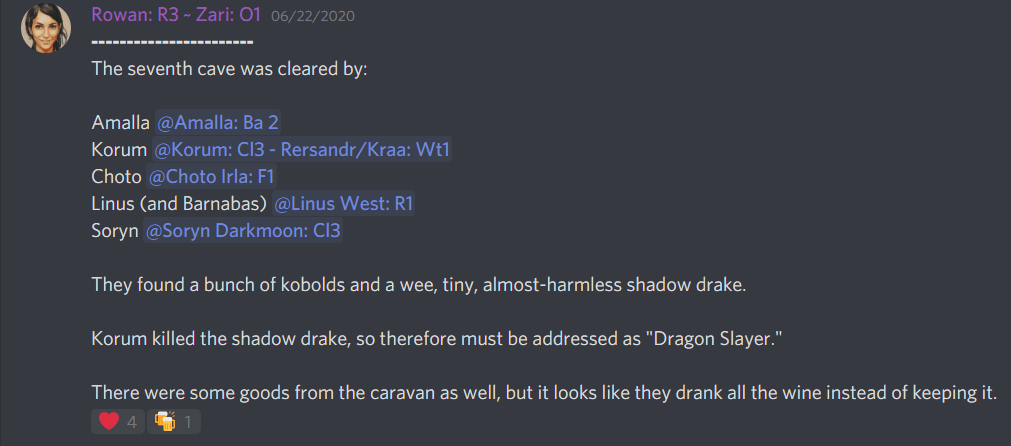
Once the players returned to town, I’d update the map with what was cleared and any notes that were made and post it to the Discord, as well as a synopsis of who went and what the players found.

After-session round-up

How’d it go?

Prepping and converting the Caves of Chaos was no joke, but it was so worth it. I’d guess that I spent around 10 hours converting and scaling encounters, setting up maps, and creating tokens, but this lead to twelve sessions where I had to do minimal prep. To be honest, if I hadn’t obsessed about scaling and instead just scaled everything to APL 2, I could have shaved quite a bit of time off of that prep.

Also, the maps? I wasn’t kidding when I said that they’re truly awesome. Modern map-making tends to focus on a beautiful backdrop to what is essentially an open playing field. The CoC caves have hallways and rooms and dead-ends and secret doors, leading to a more dynamic playing field as activity happens outside the line of sight, PCs get separated, or they get penned in between two different groupings. The maps are also interconnected, which allowed players to sneak into other dungeons and do them in reverse, taking out the boss first, then his minions, and then the scuts at the door.

The players enjoyed the whole quest line. By the time the last cave was cleared, nearly every one of the players on our roster had been to at least one cave, making it a true team effort. I had planned on making the caves disappear at the end of the quest line, but the players started making plans on what they wanted to do with them, so I guess they’ll become a feature of the town. Of course, they are magically created, so who knows what might pop up in the future…

Diving into West Marches

Ever since I saw Matt Colville’s video on running a West Marches campaign, I’d wanted to run one. For those who don’t know, a West Marches campaign turns the idea of a ‘gaming table’ upside down.

  • Instead of one GM and a set number of players, you have a huge pool of players. You may even have a pool of GMs.
  • Instead of a set group of players showing up every week, players self-organize into groups and then figure out a time that works with a GM.
  • Instead of a plot that takes a group around the world, travelling from town to town, the plot centers around a single town that has the Buffy-like habit of drawing problems to it.
  • Instead of a monolith plot, there are multiple threads going on at any time, allowing players to investigate what interests them.

I love the idea of being able to game with a larger group of players, running a plot that was less focused on telling a grand story and more a collection of interesting situations. While I do love a good epic story, it can be exhausting to plot for (especially if you’re an obsessive planner like me). And the allure of having other GMs to fall back on is especially nice. At the time, though, I was already running a campaign, so I put the idea on the back-burner.

Fast-forward to a few months ago, and an interesting opportunity fell in my lap: Becoming a GM for a RP server that hooked into the world of Court of Corvids. I pitched the idea of doing it West Marches style, and Kellandale was born.

The system

One of the biggest hurdles to having a game with handfuls of players and multiple GMs was also the most boring: Record keeping. How do you keep track of XP awarded, gold, purchases, who is playing what, what allowances have been made… After reviewing bots and a moment of madness where I considered writing up an app, we ended up going the route of simplicity.

XP is awarded monthly to everyone on the server. It’s based on the amount of server chatter that month, which we measure by using MEE6. Total server levels * 2 = Total XP for that month. This made keeping track of what level everyone is super easy, since you can find out when someone joined by searching for their username. Does this mean someone could join, say nothing, then roll in a few months later with a level three champion? Sure. But that’s balanced by…

The only way to get gold is to go on missions. When you start on the server, you get 15 gold for your starter gear. After that, if you want to buy gear, runes, potions, spells, or any other adventuring gear, you have to go on a GM-lead mission.

The only thing you get from missions is gold. Now, I love loot as much as the next GM, but I also appreciate the need for balance. Balance is easy at a table with one GM and four players: Just look at their sheets and make sure that they have a similar amount of cool stuff. Is someone behind? Drop something for them in the next encounter. But what do you do on a server where you have multiple GMs and a gaggle of players? How do you make sure everyone has the same access to cool stuff?

The town sells everything you need. The boring solution was you give everyone the same access to cool stuff. Players get a certain amount of gold for every mission. There’s no looting the bodies and selling the gear back at town. Chests don’t hold more than low-level healing potions or items for flavor. Kellandale is a town that’s “big enough” to buy any item you need, as long as you have the gold in hand.

RAW at all times. Aside from a few house-rules that had to be implemented due to the strange nature of the game, we stick to RAW, Paizo-only at all times. This does mean less flavor for players, since they can’t have a cool, GM-bespoke weapon that feeds into their character’s history. Tracking exceptions was too much of a headache, though. We balance that with…

Your rent is paid. Gold earned through missions goes towards adventuring equipment. It’s presumed that the PCs are earning spending money throughout the week using their Lore skills, so rather than roll for it, we assume that they make enough to pay for room and board. Want to go out for a nice dinner? No need to mark down that you spent 5 silver on some Cheesy Chicken at Massimo’s. It’s covered. Want to have a cool looking weapon with no mechanical benefits? Go to town. Heck, want to own a house? As long as it fits your background, go for it.

The GM decides how to run the session. We decided early on that standardizing was going to create a bigger headache than it was worth. So, if a GM is running a session, they decide how they’re going to run it. So far, we’ve run games via voice-only, text, and Roll20, but I wouldn’t be surprised to see a few other options pop up at some point. The only catch is that it has to be free for players to access.

Offer alts. One problem we realized we would have eventually is that eventually we would have wide spread of character levels. Older players might want to play with the newer players, but taking a level one along on an adventure with a crew of level fives is practically impossible to balance.

We decided to balance this by allowing alts. Once your first character hit level three, you could roll up a free level one alt. After this, monthly XP would be split between the player’s characters however they chose. Racing to get to to 20? Don’t put any XP on your alt. Want to play at the lower ranks for a while? Toss them all on there, or split them between the two characters. Get your alt to level three, and you can create a third character.

Messaging stones. Several of us came from a modern-setting server where everyone had a smart phone, so everyone could message everyone else. This was super convenient, since it allowed players to communicate without having to ‘happen’ to run into each other or having to run a scene for a quick exchange. Golarian, of course, doesn’t have a data network… but it does have magic! So we created a simple, yet powerful, mechanic: Messaging stones.

That time when my character’s brother came to town…

Every PC is given a free messaging stone when they come to Kellandale. Once they have it, they can send messages to any other PC who has a stone, as long as they’ve met them in game. Yes, they are incredibly powerful, and I would likely ban them at a regular tabletop game, but for a server filled with people in time zones around the world, it’s been the grease that keeps the gears moving.

How’s it going?

We started the server in December, though the first sign-ups didn’t happen until January. Since then, we’ve gone from barely having enough players to keep one GM busy to needing to bring on a fourth GM to make sure all players can be in a session regularly. On the way, we learned some things.

Figuring out sign-ups. One of the suggestions in Colville’s West Marches video was that players would self-organize. It became clear (at least to me) early on that players were not going to self-organize into groups and approach a GM. After all, this was a server where most players barely knew each other. The original West Marches campaign was made of friends. While we’re still feeling our way around the best way to do this, some patterns have emerged.

First, we learned to use the @everyone tag to let people know something is happening. If you’re in one Discord server, you’re probably in a dozen. We couldn’t depend on people checking in every few days.

Second, we started using reactions to figure out what time works best for interested players. For my games, a check meant you were interested and available, an O meant you were interested in being an alt, and an X meant that time absolutely didn’t work for you.

Apparently, no one was interested in fireworks this year.

After a day, I’d look over who was interested and set up the next few sessions. Turnaround time ended up being super important, since waiting too long to get on people’s calendars often lead to people getting booked elsewhere. I could almost always get everyone squeezed in, but if it came down to it, I’d have some people put down as alts with first dibs.

Embracing the meta. Everyone is in a town for the long haul. We’re never leaving, save for a short jaunt. Therefore, if you make a character, they have to have a reason to settle down. And yes, weird things are always going to happen around town, since we can’t travel far, so learn to hang a hat on it.

Building encounters properly is important. This one was a tough lesson to learn. As a GM, you never know who’s showing up to your game. Even if the sign-up was finalized a week before, players shift around, someone decides to bring their alt rather than their main, you get late adds and drops. If there was ever a game where you needed to live by the encounter building rules, it’s a PF2 West Marches campaign.

I learned to be super flexible with planned mobs. As combat got underway, I’d keep an eye on how the group was doing and delete out-of-sight trash mobs if needed. I’d also liberally apply elite or weak adjustments if I felt like the players needed a challenge or a break. I also planned when I could, making sure to calculate a few options so I wouldn’t be sent scrambling if a level 3 didn’t show, and suddenly the APL dropped by one.

Discord data! I love me some data, and since the server was on Discord, I had so much data. Discord has an API you can hit that allows you to download all of the channel data from any Discord you’re a member of. I ended up using said data to create a roster, grab who the new players were, check out which reacts were getting the most use, and see patterns for channel usage.

Future questions

Just because we’ve been doing this for half a year doesn’t mean we know everything. There’s a few issues we’ll have to wrangle with down the road.

Higher level play? The highest level characters on the server right now are level 3. We’ll likely have our first level four characters in August. While we’re not at high-tier play, we are entering into the middle-tier. Do we need to start putting together more complex plots for these higher level characters, or do we just put bigger rats in basements?

The trickiest part about introducing high level play is that there’ll still be lower-level characters running around town. How do we introduce big threats without making it improbable that a level one would stick around?

Level caps? Forced retirement? If a player never puts XP on their alt, they’ll get enough XP to level about every two months. This puts super high-level play off in the future, but mid-tier play is quickly approaching. Do we need to do anything to keep the levels of the characters flatter, or is it okay to have a small group that’s rocketing ahead? And what happens when someone reaches level 20? Do they continue to play, or do they fall into the background, allowing the player to start over again?

Scaling? Right now, we have just over 20 active players (which includes GMs), and four active GMs. This seems to work out fine, as people are able to be in sessions. But will this ratio still work if we hit 40 players? Or 100?

Want to join us?

Kellandale is tied to Queuetime’s Patreon. Anyone who donates once to the $5 tier gets access to the RP Discord and can sign up for sessions as soon as they have an approved character sheet.

[ Sign created with http://apps.pathstoadventure.com/Tavern-Sign-Crafter/craft.asp ]