
Right now, we’re seeing 5e GMs checking Pathfinder 2e and asking about what they should know before starting. The advice in the 2e subreddit has been spectacular, like what materials to start with, how to make a sheet easily, and even how to convert beloved characters.
If I had to give just one piece of advice for GMs, it would be this: The balance of power at the table is about to shift. Embrace it.
I don’t mean mechanics, though they do play into it. 5e is considered “cinematic,” which often comes down to bids between players and the GM. Players have an idea, pitch it to the GM, and the GM can set a DC that the player can then try to hit. GM fiat rules the day, encouraged by a ruleset where less is spelled out in favor of a more flexible experience. It can feel like you’re in an action-adventure movie as the scene is played out in the most ” interesting way.”
Pathfinder 2e tends to spell things out more explicitly, meaning GM fiats aren’t as necessary. Nearly every action you can do has been written out in the rules, including DCs and who can attempt them. Of course, GMs have wiggle room, but most tend to roll with what the book says. If a player is given all of the information ahead of time, they can plan their turn without GM input.
Basically, it’s like watching competence porn.

I’m not even joking: If you sit down with a group of players who know their sheets and know the system, it’s a thing of beauty, watching them take apart an encounter by breaking out every tool in their toolbox. It hits differently, knowing you took out the mouthy bad guy because the bard drained them and boosted everyone else, the caster made them clumsy and on fire, the fighter scared them and put them on the ground, and the ranger then filled them with arrows. That’s where the magic is.
Don’t mess with the magic
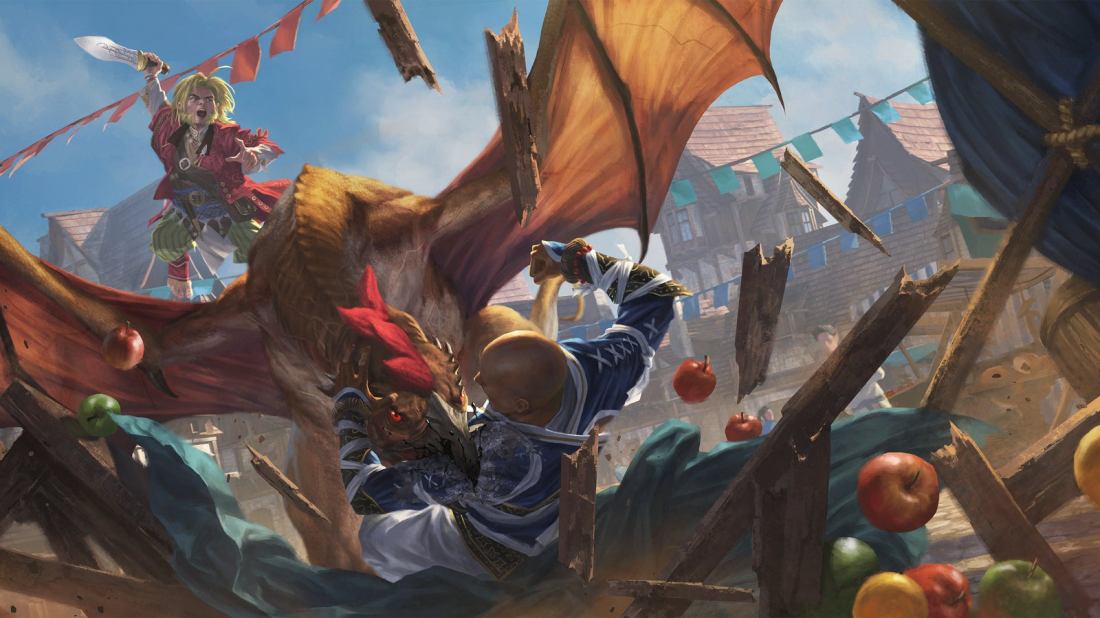
If I’ve seen a 5e GM struggle, it’s because they’re used to molding the surroundings to fit the story they want to tell. The problem is that PF2 gives players a robust toolkit, and many players come to know this toolkit inside and out, and they are relentless in deploying that knowledge.
The bad guy is monologuing?
Ranger: Hunt prey. Draw longbow. Hunted shot. They’re within 200ft of us if we can hear them, right?
GM: Uh, they’re behind a rock. Full cover.
Bard: Quickened heightened Dimension Door. Telekinetic Maneuver to get him from behind the rock.
GM: ON A CLIFF.
Oracle: Moonlight bridge 🙂
Bard: Oh, can I just toss him off the cliff?!
Monk: [cracks knuckles, about to do some monk BS]
There’s a reason why Paizo APs don’t have the bad guy monologue unless they’re okay with them biting it at that particular moment. Even in exceptionally well-laid-out APs, I’ve had plans wrecked by a group of players who saw an opportunity no one had thought of and took it, bypassing weeks of material.
That’s because the balance of power has changed.
The balance of power
The GM holds the most power at a typical 5e/cinematic table since everything comes down to their in-the-moment calls. However, as more rules become explicit and call for fewer fiats, the power shifts to the players. I’ve seen 5e GMs struggle with this as they try to wrest power back by blocking feats and abilities.
Maybe they don’t say that the feat doesn’t work… but they’ll move the baddie to what they think is out of range. Or they give them a power they shouldn’t have because it doesn’t exist (think free-action-uninterruptable-teleport). Or they make up reasons specific spells/skills don’t work against that creature.
This isn’t how you end up with a happy table. Players will feel stymied, the GM will feel like they’re plugging holes in a leaking dam, and the story will feel stilted.
A different perspective on stories
So, if you can’t depend on events falling out a certain way without frustrating your players and yourself, is it even possible to plot ahead in strategic games?!
Absolutely. It just takes a shift in your perspective.
The most significant shift is that you stop seeing your plans as plots to be experienced and more as problems to be solved. You give your players a puzzle, and they have to use their wits and toolkits to figure it out. The story comes from how they do it. You start with the assumption that there’s more than one way to resolve the conflict and that the players will likely surprise you.
One of my favorite scenarios was a murder mystery, where the PCs were tasked to find the body (hidden away), discover who was guilty (probably one of the noble hosts), and find some additional dirt on them (the murder wouldn’t be enough because this was Cheliax). While writing it up, I laid out all that had gone before, who was involved, how, who knew what… but had no idea how they would succeed.
As Matt Colville once said, that wasn’t my problem. That was their problem.
My players were resourceful, using tricks I hadn’t thought of to get information, snoop around, find dirt, and even bring the victim back to life. They even made a few allies along the way! It’s not an outcome I could have predicted, but it’s one that the players still talk about to this day. And, even better, I could just relax and eat cookies while the players planned and poked around, watching them engage with the world without me having to make up anything on the fly.





 Katie Plays Games