Dhampir$: Family Reunion (session one)

Author’s note: I’ve recently started a PF2 stream with a few friends on the Twitch channel Roll the Role. The premise: A crew of dhampirs with the same ‘sire’ have banded together to make coin, a name for themselves, and sort out their complicated past and future. This takes place after session one.

[ < A Prologue ] [ Dhampir$: Save the Princess (session two) > ]

Leaving Alkenstar before dawn, Anna had hoped to be enjoying the clean air of the countryside by evening. Instead, she found herself anointing her room with scented oils to keep the acrid smoke of the city at bay. They’d made good progress, but the smokestacks were hard to outpace. 

She sat at the tiny writing desk and took out her journal. It was a habit from childhood, drilled into her by an endless stream of nannies, who saw it as a calm and harmless pastime for a girl who was too curious by half. Perhaps if she had been interested in the arts or other mundane affairs, they would have been more comfortable with her explorations, but after the frog incident…

Well, they preferred a medium that was more easily put out of mind. 

Anna dipped her pen and began to write…

✱✱✱

12 Gozran 4720 ~ Rusty Bedfellow Inn ~ North of Alkenstar

Lenore has been taken. I expected one of us would one day be carried away, but I thought it would be a crowd with torches and pitchforks, or perhaps a duke in desperate need of a scapegoat. I didn’t expect a dragon. And a dragon with portal magic. 

Even stranger, her abduction came with a vision.

I do suppose I’m getting ahead of myself. We had been asked to take care of a small matter of a cult in the outskirts of Alkenstar. A rather dull matter, but cults have  a nasty habit of creating larger issues for us down the line (either adoration, admonition, or in the worst cases, both), so better to be nipped in the bud. Even better if we’ll be paid for it.

It was just as we were putting ourselves to rights that the portal opened, and poor Lenore was snatched away. We had no time to react, though I’ve spent more time than I like second guessing our actions. Perhaps if we had a counterspell ready, or one of us had moved faster…

Ah, well. I’m sure Lenore is fine. She’s unparalleled as a warrior, and resourceful as well. She wouldn’t have made it this far if she weren’t able to take care of herself. If anything, we siblings persevere…

But speaking of siblings… 

I’ve never been one who’s prone to visions. Poor aunt Martina was plagued by them, and I heard my mother would have episodes, but they never struck me. I had assumed that they skipped over me… until now. I would have been ready to disregard it as an overtired mind, but Cyt and Samael experienced them as well. A cold plain, a love for one’s kin, a thirst for blood, a need for revenge…

I do believe we have family in the North, which is where we believe Lenore was taken. It can’t be a coincidence. I don’t believe in coincidences. 

I should write of the unfortunate events of the bar, but I find myself growing tired, and I’m certain we’ll rise early. Suffice it to say, it is likely a good thing that we chose to leave Alkenstar for a time. 

✱✱✱

Anna sat back from the journal, yawning. From the darkness came a tutting. ภ๏Շ שєгץ ɭค๔ץɭเкє(in a creepy font) Not very ladylike

One of the shadows in the corner of the room had solidified. Anna hadn’t called her eidolon forth, but that rarely stopped her companion from showing up. Anna gave her a rueful look. “My accommodations are rubbing off on me. ‘Rusty Bedfellow,’ indeed. I’m shocked they didn’t rent by the hour. You’ll keep watch, my pet?”

Silence was the only response, but that was better than the usual morose retort. Before long, Anna was tucked into a bed that would be better used as kindling under whoever managed the cleaning staff, and was asleep.

✱✱✱

It was not a peaceful sleep.

She was back in her room, in the sickly light of the LeClerche manor. She stood at her window, watching as Maizon made his way to the main road, and hopefully to a caravan that would take him to the Mwangi Expanse. Jace was gone. Her father was gone. Most of the staff had left, save for their aging butler and a plain-faced chambermaid who she suspected he was tupping. Even them, they were planning on moving on as soon as Anna signed the papers…

She looked down at them. Their solicitor had drawn them up, likely while her father’s body was still warm. He’d laid out the particulars for her: She wasn’t quite alive, and her kind wasn’t known for being fecund. Therefore, wasn’t it in the best interests that she quit her claim on the LeClerche estate? She would be given a settlement, and a distant cousin (from a branch untouched by tragedy) would absorb their titles and estates. The name would be given to one of his mewling brats, and really, isn’t that what her mother and father would have wanted? To have the name continue? 

She looked up. The fog had swallowed Maizon. The house was silent. She had never felt so alone, and the dread of it threatened to swallow her whole. Her kind could live as long as elves, and just two decades in, Anna had lost everyone

A knock sounded. “Miss?”

The solicitor. Anna swallowed her growing despair and turned. “Enter.”

The door opened. The man her father had retained was in his middling years, youth being eaten away by fine lines and touches of gray. He wore a vest that Anna was certain he thought was the height of fashion, but that Absolom had given up on three seasons ago. He gave her a sad-eyed smile, acting out the part of the sympathetic compatriot.

“How are you doing today, Miss Anna?”

“As well as can be expected.” She realized her eyes were too dry, but it couldn’t be helped. Another side-effect of her ‘condition’: She rarely cried. “I hope the day finds you well.”

“Much the same. Your father and I hunted often. I was so stunned when I heard his horse had thrown him. He was an excellent equestrian.”

“If his death surprised you, then you couldn’t have studied our history too closely. Horses were a popular way to go. I always told Daddy he should avoid them.” 

The solicitor cleared his throat nervously. “Well, he was a man who little liked being told what to do.” Oh, he’d heard. “Have you had a chance to read over the papers?”

“I have. Do you know, I think Daddy liked riding because he thought he’d sorted the curse. He did all sorts of things he shouldn’t have…” Anna picked up the papers and started to leaf through them. “Ate fish with bones. Boated. Fenced. He even liked to toy around with firearms, though he was a terrible shot.”

“Er, yes, quite the character. Do you have any questions about the settlement?”

Her gaze landed on the settlement. A heady amount for a peasant. A paltry amount for one who might live as long as an elf. “I don’t know if I would have called him a ‘character.’ But he really thought he had beaten it. Even if he hadn’t, he was still a credit to the name, don’t you think?”

“Yes, just as your cousin shall be. I’ve heard he’s quite the bright lad. He’ll marry well, I have no doubts. It’s what your father would have wanted.”

Anna smiled, keeping her lips pressed together. “My father is dead. What he wanted doesn’t matter.” And she tossed the papers into the fire.

The solicitor cried out as the flames consumed them. He reached, but a word of magic made the flames hungry, consuming the parchment in seconds. He turned on Anna, hatred in his eyes. “You prissy little bitch…” He stepped towards her, one hand going for his pocket. Anna, too late, realized how alone she was, how easy it would be to pay off the servants. He pulled out a gun. “You know, maybe this is easier. The despondent daughter eats a bullet and saves the Howes some gold–“

A hand wrapped around the man’s neck, inky black and trailing a dark smoke. In an instant, the solicitor was thrown across the room, cracking the plaster and wrecking the wainscotting. His head lolled at an unnatural angle and his eyes stared blankly. Anna found herself staring at a dark form, a woman, but her face was gaunt and her eyes shone with a terrible light. (In a creepy font) Misstress… it hissed in a voice from beyond the grave, and it reached for her. Anna heard someone screaming, and it took a moment to realize it was her own voice. The hand touched her cheek, and all went black.

[ < A Prologue ] [ Next > ]

Extra Life 2020: 20 levels in 24 hours

(CW: Childhood cancer and death. If you want to skip to the game details, click here)

Extra Life is one of those charities I love to watch and I’ve always wanted to participate in, but never had a reason to jump in… Until this year. I had an idea. Take a group of people, allow them to sign up for time slots, and run a campaign where you level about every hour, meaning you go from level one to level 20 in one day.

What is Extra Life?

From their website:

Extra Life unites gamers across the world to help kids treated at 170 Children’s Hospitals in the U.S. and Canada. When you join us to help fundraise, you will help kids treated at your local CMN Hospital and have fun at the same time! COVID-19 has had an unprecedented impact on these children’s hospitals and your love of gaming is needed now more than ever.

Extra Life website

For me personally, Children’s Hospitals hold a special place in my heart. (CW: Childhood cancer / death). In 1984, my older brother was diagnosed with a brain tumor.

I’m the bunny. He’s the mouse. Best guess is that this is 1981.

The Eighties were not a good time to get that diagnosis. Treatment options were limited. Even small tumors that were easy to remove were considered life threatening, and his tumor was neither small nor simple.

At a standard hospital, I family visits would have been limited, and it’s very likely that I, a germ-laden preschooler would have been banned. But Children’s was different. They knew how to deal with small children and answer tough questions and do the things that help make horrible situations a little better. So, I got to see my brother, and he got to have a real birthday party (his seventh), and he was allowed to have an Atari in his room, which was pretty rad.

He didn’t make it, but I’ll always be grateful that the time we had left with him was a place as great as Children’s Hospital.

Rabbit, Easter, Hare, Mammal, Nature, Easter Bunny
Enough sad stuff, time for a bunny spacer

What’s the plan for Extra Life?

I’m a part of a West Marches server called Kellandale, which is attached to the show Court of Corvids. This year, we’re doing a one-day streamed event where players will go from level one to level twenty in 24 hours. Your character dies? No worries, your cousin with an eerily similar name will run in to avenge you. Bob is dead, long live Rob.

Most of us have a good decade between the time when we could game for 24 hours straight, so GMs will be running in shifts, and players can sign up for whatever shift works for them.

How to help

The biggest thing we need? Donations. Our team is collecting donations through the Extra Life charity. Our goal is to raise $1500 as a team, though obviously, we’d love to blow through that. Personally, I’d like to raise $1000, and the day of, I plan to do matching donations.

Team Kellandale – The whole lot of us

My Extra Life page – Just my page

If you can’t donate, spreading the word helps a ton, as does just coming and hanging out in chat the day of. Having people active during the stream is great for energy, and hey, maybe we’ll have a slot open up!

How to play

The easiest way to play is to join the Kellandale Discord server, since those players get first dibs on slots. However, if you know me (and I mean you really know me), hit me up on Twitter.

Caves of Chaos for Pathfinder 2e

One of the challenges of being a GM for a West Marches style of campaign is coming up with content where it’s easy for a large number of players to interact with the plot, while keeping the challenge rating flexible. My husband recommended Keep on the Borderlands, a classic module published in 1979 and written by none other than Gary Gygax.

I bought it from DriveThruRPG, and I’m glad I did. Not only is it an interesting piece of gaming history, but it’s an excellent adventure, even today. Converting it to work in 2e took way less energy than I was expecting, even though the module is old enough to have grown children of its own.

What is it?

Dungeon of Signs: B2 - Keep on the Borderlands - Review

Keep on the Borderlands has two halves to it: A keep that the players liberate and then mold, and the Caves of Chaos, which serve as the main threat. The Caves of Chaos aren’t quite as dramatic as they sound. It’s basically one huge map that features a number of caves, some interconnecting, some not. I ended up not using the “Keep” part of the module (the group already has a functional town), but the Caves of Chaos were well worth the price of the module.

And yes, I recommend grabbing the module. Not only is it a short, interesting read, but it has some tips on how the denizens caves should react to a bunch of adventurers running around and causing trouble for them.

Why use it?

Some of the advantages of using the Caves of Chaos:

  1. Solid maps. The layout of all of the caves are great. There’s plenty of room for a group of PCs to move around, but they have enough corners and doors to make line of sight important.
  2. Great dynamics. While you could, in theory, just use a key you find online for the Caves, I recommend giving the module a read. It recommends actions for various NPCs, and suggests how the caves might change over time as more of them are cleared out.
  3. Diversity of creatures. It’s not just goblins! The caves feature all sorts of enemies, giving players varied challenges that still make sense.
  4. Easy to scale. This might be more PF2 than anything else, but I found the caves to be fairly easy to scale to different levels. This is super important in a West Marches campaign, where you never know what the APL is going to be (though I did cap it at APL 3)
  5. Lots of pretty resources. This module has been out for a while, so the amount of player-created content is high. I found no shortages of maps, keys, and guides. I even found maps that were redrawn to work with Roll20!

What I had to change

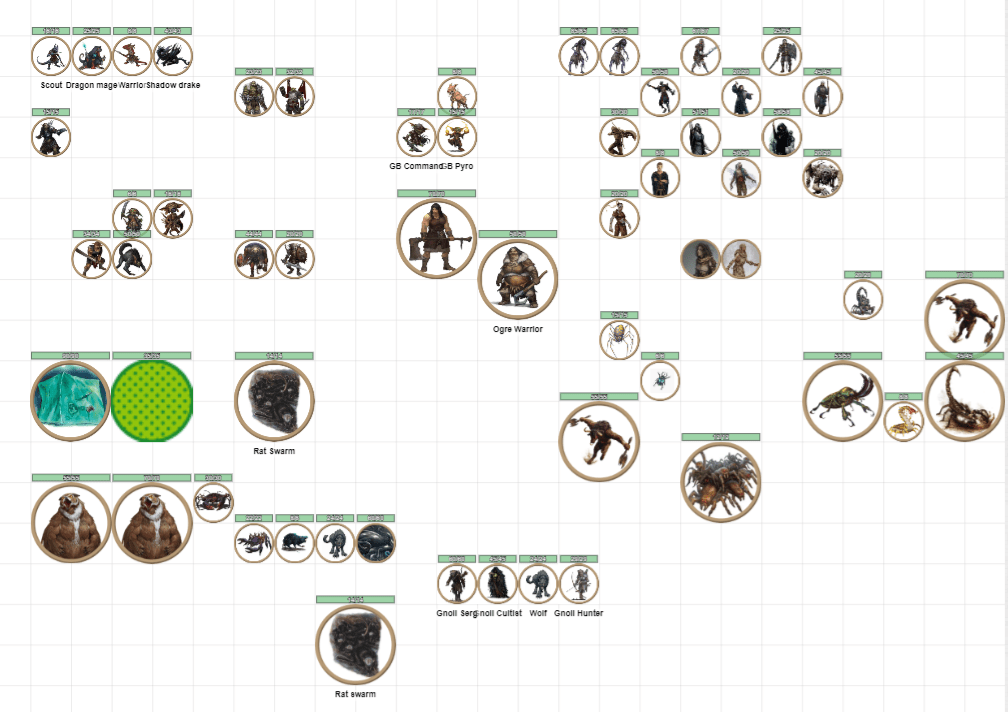
Keep on the Borderlands was absolutely written for wargamers. The number of expected mobs was huge, and the playing field was much larger. The squares were ten feet, and it wasn’t unusual to have a room filled 10 to 15 mobs. I ended up switching to five-foot squares, and drastically reduced the number of enemies.

There were also a few creatures I had to change, since they’re either too high level, or they don’t exist yet in Pathfinder 2e (as of this writing, only two of the Bestiaries are out). For example, the medusa was straight out, and stirges haven’t made it over to PF2 yet. I ended up swapping in new creatures, since I didn’t feel like writing my own, and it isn’t like there’s a shortage of options to choose from.

The original maps work off of 10′ squares, which I changed to 5′ squares. It wasn’t like we needed the room, after all, since I wasn’t throwing dozens of goblins at the players.

Getting converted

For each of the maps, I decided that I would keep the general theme, but set up at least three types of encounters: Trivial, Moderate, and Severe, with one Extreme tossed in one of the caves for fun. Because I didn’t know what APL I would be working with, I went ahead and created scaled versions of each encounter. That way, I didn’t have to worry running out of lower level caves, nor did I have to worry about a group of level threes tearing through a bunch of goblins.

Then, I made a table of rough conversions from the module to PF2. This way, I could go back to it as I built out the caves. Most of the creatures were a straight conversion, though it was nice to know what level range I was working with. If a family didn’t go high enough, I’d grab something from another family, or I’d toss a challenge adjustment on one of them. The only creature I had to toss out completely was the medusa, but a hag worked well as a replacement, hidden among the prisoners.

My creature page

Once that was done, I set up the encounters for each cave. I did this for three APLs (one through three), because one of the downsides of a West Marches campaign is that you never know who is going to show up. It was a little more work, but in the end, it was worth it, since it greatly reduced the amount of time it took me to set up a cave.

Setting up the maps

Remember how I said player-created content was a huge benefit to running this AP? I had no shortage of wonderful, detailed, re-imagined maps. I ended up going with the cheekily named “Caverns of Entropy” from Roll20 user Keith Reinig. Even better, right after I bought the set, he added another one with dynamic lighting.

I also grabbed the overland and player maps from Weem as a reference for players between sessions. As they explored, I added their notes and the cave layouts, which cut down on players accidentally keeping vital information to themselves (something none of the players would have done intentionally).

Finally, I added a page in Roll20 for all of my prepped creatures. I ended up using this holding pen so much that I think I’ll keep this around even after I’m done with the caves.

Running the caves!

Now that everything was set up, I was ready to let players make a wreck of my plans. I decided to play it relatively straightforward: The valley appeared near town due to some magical shenanigans and a non-combatant NPC was tasked with getting adventurers to clear it out. This gave the players a hub to work around, since it was presumed that all information was shared with him, and he shared said information with each group. Each session started with players gathering at his shop, where they were shown a map and told details that the previous adventurers had uncovered. From there, they’d decide what they wanted to do, and then set out.

I allowed players to scout one cave entrance per excursion, with a particularly good roll allowing them to also get details about neighboring caves. I’d give a hint as to the kind of creatures inside based on the trash outside the cave (or lack of it). Intelligent creatures might have broken weapons outside their cave, while unintelligent creatures might just have piles of bones. Enemies with military discipline might have neater piles, while a more chaotic group will have stuff strewn everywhere.

Players’ notes

After any scouting, they’d tell me which cave they’d decided on, and I’d put them on mute for ten minutes while I set up. Because this is a mixed level server, I never knew what the APL would be, but having the creatures and encounters set up beforehand saved a ton of time. Once I came back, they’d clear out whichever cave they’d chosen, with a soft-limit of 2.5 hours. Once time was up and they were out of combat, they had to leave, even if there were still creatures roaming around. Since I often run during the week, I can only stay up so late.

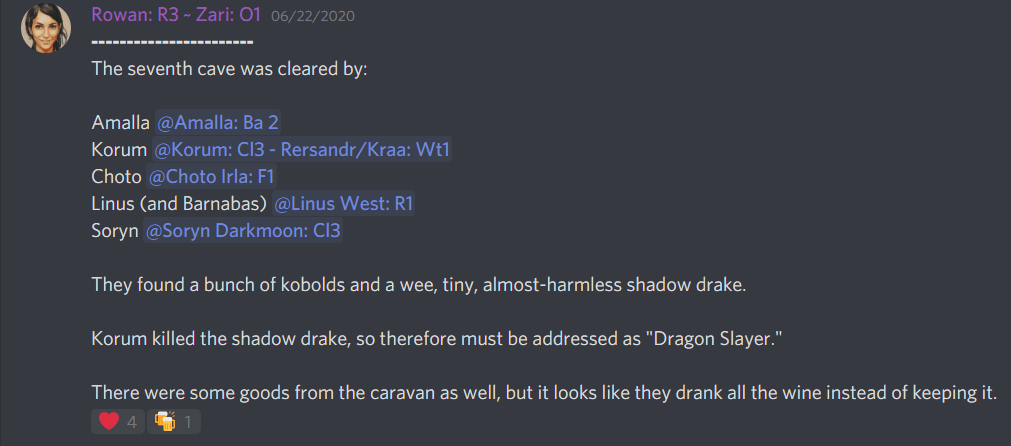
Once the players returned to town, I’d update the map with what was cleared and any notes that were made and post it to the Discord, as well as a synopsis of who went and what the players found.

After-session round-up

How’d it go?

Prepping and converting the Caves of Chaos was no joke, but it was so worth it. I’d guess that I spent around 10 hours converting and scaling encounters, setting up maps, and creating tokens, but this lead to twelve sessions where I had to do minimal prep. To be honest, if I hadn’t obsessed about scaling and instead just scaled everything to APL 2, I could have shaved quite a bit of time off of that prep.

Also, the maps? I wasn’t kidding when I said that they’re truly awesome. Modern map-making tends to focus on a beautiful backdrop to what is essentially an open playing field. The CoC caves have hallways and rooms and dead-ends and secret doors, leading to a more dynamic playing field as activity happens outside the line of sight, PCs get separated, or they get penned in between two different groupings. The maps are also interconnected, which allowed players to sneak into other dungeons and do them in reverse, taking out the boss first, then his minions, and then the scuts at the door.

The players enjoyed the whole quest line. By the time the last cave was cleared, nearly every one of the players on our roster had been to at least one cave, making it a true team effort. I had planned on making the caves disappear at the end of the quest line, but the players started making plans on what they wanted to do with them, so I guess they’ll become a feature of the town. Of course, they are magically created, so who knows what might pop up in the future…

Diving into West Marches

Ever since I saw Matt Colville’s video on running a West Marches campaign, I’d wanted to run one. For those who don’t know, a West Marches campaign turns the idea of a ‘gaming table’ upside down.

  • Instead of one GM and a set number of players, you have a huge pool of players. You may even have a pool of GMs.
  • Instead of a set group of players showing up every week, players self-organize into groups and then figure out a time that works with a GM.
  • Instead of a plot that takes a group around the world, travelling from town to town, the plot centers around a single town that has the Buffy-like habit of drawing problems to it.
  • Instead of a monolith plot, there are multiple threads going on at any time, allowing players to investigate what interests them.

I love the idea of being able to game with a larger group of players, running a plot that was less focused on telling a grand story and more a collection of interesting situations. While I do love a good epic story, it can be exhausting to plot for (especially if you’re an obsessive planner like me). And the allure of having other GMs to fall back on is especially nice. At the time, though, I was already running a campaign, so I put the idea on the back-burner.

Fast-forward to a few months ago, and an interesting opportunity fell in my lap: Becoming a GM for a RP server that hooked into the world of Court of Corvids. I pitched the idea of doing it West Marches style, and Kellandale was born.

The system

One of the biggest hurdles to having a game with handfuls of players and multiple GMs was also the most boring: Record keeping. How do you keep track of XP awarded, gold, purchases, who is playing what, what allowances have been made… After reviewing bots and a moment of madness where I considered writing up an app, we ended up going the route of simplicity.

XP is awarded monthly to everyone on the server. It’s based on the amount of server chatter that month, which we measure by using MEE6. Total server levels * 2 = Total XP for that month. This made keeping track of what level everyone is super easy, since you can find out when someone joined by searching for their username. Does this mean someone could join, say nothing, then roll in a few months later with a level three champion? Sure. But that’s balanced by…

The only way to get gold is to go on missions. When you start on the server, you get 15 gold for your starter gear. After that, if you want to buy gear, runes, potions, spells, or any other adventuring gear, you have to go on a GM-lead mission.

The only thing you get from missions is gold. Now, I love loot as much as the next GM, but I also appreciate the need for balance. Balance is easy at a table with one GM and four players: Just look at their sheets and make sure that they have a similar amount of cool stuff. Is someone behind? Drop something for them in the next encounter. But what do you do on a server where you have multiple GMs and a gaggle of players? How do you make sure everyone has the same access to cool stuff?

The town sells everything you need. The boring solution was you give everyone the same access to cool stuff. Players get a certain amount of gold for every mission. There’s no looting the bodies and selling the gear back at town. Chests don’t hold more than low-level healing potions or items for flavor. Kellandale is a town that’s “big enough” to buy any item you need, as long as you have the gold in hand.

RAW at all times. Aside from a few house-rules that had to be implemented due to the strange nature of the game, we stick to RAW, Paizo-only at all times. This does mean less flavor for players, since they can’t have a cool, GM-bespoke weapon that feeds into their character’s history. Tracking exceptions was too much of a headache, though. We balance that with…

Your rent is paid. Gold earned through missions goes towards adventuring equipment. It’s presumed that the PCs are earning spending money throughout the week using their Lore skills, so rather than roll for it, we assume that they make enough to pay for room and board. Want to go out for a nice dinner? No need to mark down that you spent 5 silver on some Cheesy Chicken at Massimo’s. It’s covered. Want to have a cool looking weapon with no mechanical benefits? Go to town. Heck, want to own a house? As long as it fits your background, go for it.

The GM decides how to run the session. We decided early on that standardizing was going to create a bigger headache than it was worth. So, if a GM is running a session, they decide how they’re going to run it. So far, we’ve run games via voice-only, text, and Roll20, but I wouldn’t be surprised to see a few other options pop up at some point. The only catch is that it has to be free for players to access.

Offer alts. One problem we realized we would have eventually is that eventually we would have wide spread of character levels. Older players might want to play with the newer players, but taking a level one along on an adventure with a crew of level fives is practically impossible to balance.

We decided to balance this by allowing alts. Once your first character hit level three, you could roll up a free level one alt. After this, monthly XP would be split between the player’s characters however they chose. Racing to get to to 20? Don’t put any XP on your alt. Want to play at the lower ranks for a while? Toss them all on there, or split them between the two characters. Get your alt to level three, and you can create a third character.

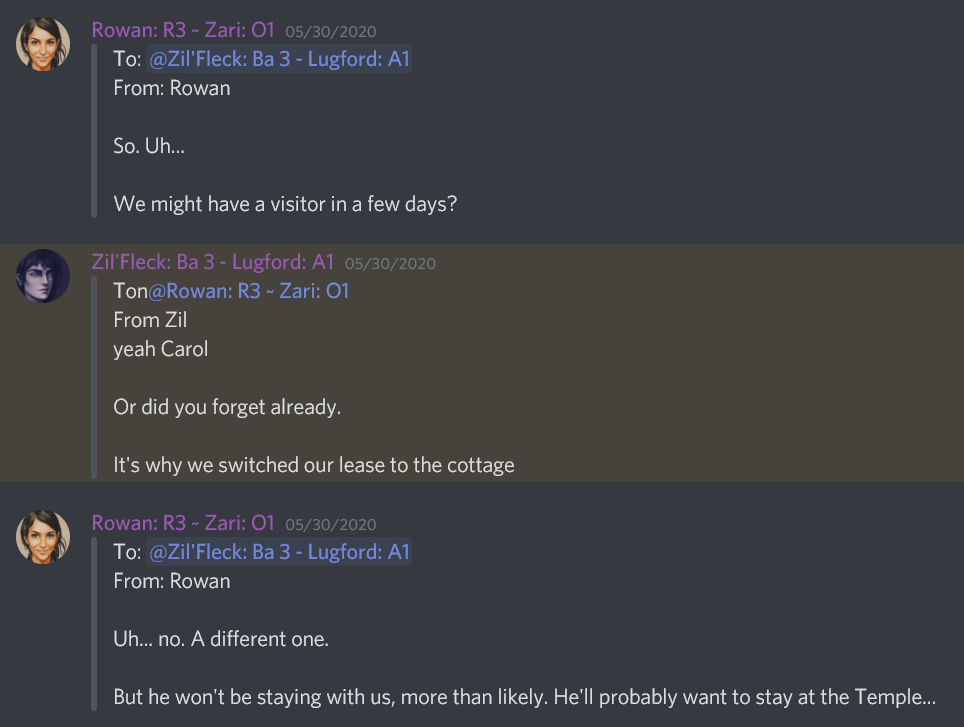
Messaging stones. Several of us came from a modern-setting server where everyone had a smart phone, so everyone could message everyone else. This was super convenient, since it allowed players to communicate without having to ‘happen’ to run into each other or having to run a scene for a quick exchange. Golarian, of course, doesn’t have a data network… but it does have magic! So we created a simple, yet powerful, mechanic: Messaging stones.

That time when my character’s brother came to town…

Every PC is given a free messaging stone when they come to Kellandale. Once they have it, they can send messages to any other PC who has a stone, as long as they’ve met them in game. Yes, they are incredibly powerful, and I would likely ban them at a regular tabletop game, but for a server filled with people in time zones around the world, it’s been the grease that keeps the gears moving.

How’s it going?

We started the server in December, though the first sign-ups didn’t happen until January. Since then, we’ve gone from barely having enough players to keep one GM busy to needing to bring on a fourth GM to make sure all players can be in a session regularly. On the way, we learned some things.

Figuring out sign-ups. One of the suggestions in Colville’s West Marches video was that players would self-organize. It became clear (at least to me) early on that players were not going to self-organize into groups and approach a GM. After all, this was a server where most players barely knew each other. The original West Marches campaign was made of friends. While we’re still feeling our way around the best way to do this, some patterns have emerged.

First, we learned to use the @everyone tag to let people know something is happening. If you’re in one Discord server, you’re probably in a dozen. We couldn’t depend on people checking in every few days.

Second, we started using reactions to figure out what time works best for interested players. For my games, a check meant you were interested and available, an O meant you were interested in being an alt, and an X meant that time absolutely didn’t work for you.

Apparently, no one was interested in fireworks this year.

After a day, I’d look over who was interested and set up the next few sessions. Turnaround time ended up being super important, since waiting too long to get on people’s calendars often lead to people getting booked elsewhere. I could almost always get everyone squeezed in, but if it came down to it, I’d have some people put down as alts with first dibs.

Embracing the meta. Everyone is in a town for the long haul. We’re never leaving, save for a short jaunt. Therefore, if you make a character, they have to have a reason to settle down. And yes, weird things are always going to happen around town, since we can’t travel far, so learn to hang a hat on it.

Building encounters properly is important. This one was a tough lesson to learn. As a GM, you never know who’s showing up to your game. Even if the sign-up was finalized a week before, players shift around, someone decides to bring their alt rather than their main, you get late adds and drops. If there was ever a game where you needed to live by the encounter building rules, it’s a PF2 West Marches campaign.

I learned to be super flexible with planned mobs. As combat got underway, I’d keep an eye on how the group was doing and delete out-of-sight trash mobs if needed. I’d also liberally apply elite or weak adjustments if I felt like the players needed a challenge or a break. I also planned when I could, making sure to calculate a few options so I wouldn’t be sent scrambling if a level 3 didn’t show, and suddenly the APL dropped by one.

Discord data! I love me some data, and since the server was on Discord, I had so much data. Discord has an API you can hit that allows you to download all of the channel data from any Discord you’re a member of. I ended up using said data to create a roster, grab who the new players were, check out which reacts were getting the most use, and see patterns for channel usage.

Future questions

Just because we’ve been doing this for half a year doesn’t mean we know everything. There’s a few issues we’ll have to wrangle with down the road.

Higher level play? The highest level characters on the server right now are level 3. We’ll likely have our first level four characters in August. While we’re not at high-tier play, we are entering into the middle-tier. Do we need to start putting together more complex plots for these higher level characters, or do we just put bigger rats in basements?

The trickiest part about introducing high level play is that there’ll still be lower-level characters running around town. How do we introduce big threats without making it improbable that a level one would stick around?

Level caps? Forced retirement? If a player never puts XP on their alt, they’ll get enough XP to level about every two months. This puts super high-level play off in the future, but mid-tier play is quickly approaching. Do we need to do anything to keep the levels of the characters flatter, or is it okay to have a small group that’s rocketing ahead? And what happens when someone reaches level 20? Do they continue to play, or do they fall into the background, allowing the player to start over again?

Scaling? Right now, we have just over 20 active players (which includes GMs), and four active GMs. This seems to work out fine, as people are able to be in sessions. But will this ratio still work if we hit 40 players? Or 100?

Want to join us?

Kellandale is tied to Queuetime’s Patreon. Anyone who donates once to the $5 tier gets access to the RP Discord and can sign up for sessions as soon as they have an approved character sheet.

[ Sign created with http://apps.pathstoadventure.com/Tavern-Sign-Crafter/craft.asp ]