Right now, we’re seeing 5e GMs checking Pathfinder 2e and asking about what they should know before starting. The advice in the 2e subreddit has been spectacular, like what materials to start with, how to make a sheet easily, and even how to convert beloved characters.
If I had to give just one piece of advice for GMs, it would be this: The balance of power at the table is about to shift. Embrace it.
I don’t mean mechanics, though they do play into it. 5e is considered “cinematic,” which often comes down to bids between players and the GM. Players have an idea, pitch it to the GM, and the GM can set a DC that the player can then try to hit. GM fiat rules the day, encouraged by a ruleset where less is spelled out in favor of a more flexible experience. It can feel like you’re in an action-adventure movie as the scene is played out in the most ” interesting way.”
Pathfinder 2e tends to spell things out more explicitly, meaning GM fiats aren’t as necessary. Nearly every action you can do has been written out in the rules, including DCs and who can attempt them. Of course, GMs have wiggle room, but most tend to roll with what the book says. If a player is given all of the information ahead of time, they can plan their turn without GM input.
Basically, it’s like watching competence porn.
Elle Woods is peak Competence Porn, I am taking no questions at this time.
I’m not even joking: If you sit down with a group of players who know their sheets and know the system, it’s a thing of beauty, watching them take apart an encounter by breaking out every tool in their toolbox. It hits differently, knowing you took out the mouthy bad guy because the bard drained them and boosted everyone else, the caster made them clumsy and on fire, the fighter scared them and put them on the ground, and the ranger then filled them with arrows. That’s where the magic is.
Don’t mess with the magic
If I’ve seen a 5e GM struggle, it’s because they’re used to molding the surroundings to fit the story they want to tell. The problem is that PF2 gives players a robust toolkit, and many players come to know this toolkit inside and out, and they are relentless in deploying that knowledge.
The bad guy is monologuing? Ranger: Hunt prey. Draw longbow. Hunted shot. They’re within 200ft of us if we can hear them, right? GM: Uh, they’re behind a rock. Full cover. Bard: Quickened heightened Dimension Door. Telekinetic Maneuver to get him from behind the rock. GM: ON A CLIFF. Oracle: Moonlight bridge 🙂 Bard: Oh, can I just toss him off the cliff?! Monk: [cracks knuckles, about to do some monk BS]
There’s a reason why Paizo APs don’t have the bad guy monologue unless they’re okay with them biting it at that particular moment. Even in exceptionally well-laid-out APs, I’ve had plans wrecked by a group of players who saw an opportunity no one had thought of and took it, bypassing weeks of material.
That’s because the balance of power has changed.
The balance of power
The GM holds the most power at a typical 5e/cinematic table since everything comes down to their in-the-moment calls. However, as more rules become explicit and call for fewer fiats, the power shifts to the players. I’ve seen 5e GMs struggle with this as they try to wrest power back by blocking feats and abilities.
Maybe they don’t say that the feat doesn’t work… but they’ll move the baddie to what they think is out of range. Or they give them a power they shouldn’t have because it doesn’t exist (think free-action-uninterruptable-teleport). Or they make up reasons specific spells/skills don’t work against that creature.
This isn’t how you end up with a happy table. Players will feel stymied, the GM will feel like they’re plugging holes in a leaking dam, and the story will feel stilted.
A different perspective on stories
So, if you can’t depend on events falling out a certain way without frustrating your players and yourself, is it even possible to plot ahead in strategic games?!
Absolutely. It just takes a shift in your perspective.
The most significant shift is that you stop seeing your plans as plotsto be experienced and more as problems to be solved. You give your players a puzzle, and they have to use their wits and toolkits to figure it out. The story comes from how they do it. You start with the assumption that there’s more than one way to resolve the conflict and that the players will likely surprise you.
One of my favorite scenarios was a murder mystery, where the PCs were tasked to find the body (hidden away), discover who was guilty (probably one of the noble hosts), and find some additional dirt on them (the murder wouldn’t be enough because this was Cheliax). While writing it up, I laid out all that had gone before, who was involved, how, who knew what… but had no idea how they would succeed.
As Matt Colville once said, that wasn’t my problem. That was their problem.
My players were resourceful, using tricks I hadn’t thought of to get information, snoop around, find dirt, and even bring the victim back to life. They even made a few allies along the way! It’s not an outcome I could have predicted, but it’s one that the players still talk about to this day. And, even better, I could just relax and eat cookies while the players planned and poked around, watching them engage with the world without me having to make up anything on the fly.
Ever since Paizo announced the wild ride that would prove to be Gatewalkers, I’ve been dying to run it. A group of people pulled together by weird shit and bounced around the universe to completely new locales? Sign me up! Happily, the crew I stream with on D20Saves was also eager to play it, so I had a ready-made crew!
One downside of running a brand-new AP is that you don’t have many lessons learned from the community to help you out. Therefore, I decided to document my thoughts about the AP, which might help GMs considering it but haven’t started it yet. So, the first part of this post will be about the stream, and the second half will be more GM and prep focused. Spoilers will run rampant in the second half.
Stream
The stream will be every other Wednesday (7:30pm EST) on D20Saves and features most of the crew from our sister stream, Fists of the Ruby Phoenix.
The cast (in alphabetical order, by class):
Dr. Bjorrlbr Wat’Zin, Grippli Cleric of Arazni (@DicePorn)
I can say from a wealth of personal experience that this is a great group to run with: Knowledgeable as hell, but not afraid of just relaxing and having fun with how the story plays out.
You can watch the first episode of Gatewalkers here. I’d embed the video, but apparently, we classify as adult content. Maybe one too many f-bombs? At any rate, in Episode one, the PCs receive a letter from an academic asking them to join him in researching mysterious gates that opened across Golarion some six months ago. This disparate crew is especially motivated since they all went through said gates but returned three months later with no memory of what happened while they were gone…
The GM stuff (SPOILERS BEWARE, PLAYERS GO AWAY)
……
….
…
..
Okay, you’ve had plenty of time to leave. Here there be spoilers.
While prepping this book, I realized this was a packed AP. I’m no stranger to running Adventure Paths, but the content in the first chapter is usually light: The players get to know each other, the GM gets a handle on the world, and you have a few mild encounters to set the mood. In GW? You do a whole investigation, AND you go through a dungeon.
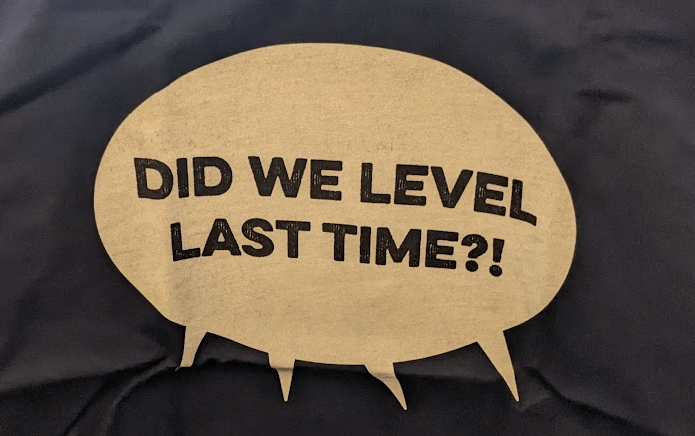
It doesn’t seem to drag, though. There’s always something pushing the players forward, so hopefully, they won’t feel like their level is too delayed. Even so, I got a new shirt to add to my collection.
They say this to me even when I’m not the one GMing.
Another thing that the AP feels like it’s missing is the players meeting each other. To be fair, most APs start with the PCs having minimal reasons to know one another, but in this case, you start on the road, heading toward your first assignment with someone who just hired you. I started the game slightly earlier, giving each player a letter from Dr. Ritalson. The handout:
"My name is Dr. Etward Ritalson, formally of Lepidstadt University. We have more than a few things in common, starting with a particular jaunt through a mysterious portal. While some are content to forget the whole matter, I cannot let such an intriguing (and personal) mystery rest! As such, I have taken a sabbatical from my duties at the University and have dedicated myself full-time to unraveling the missing moment.

"I am reaching out to those who had a similar experience in hopes of putting together a research team. There's too much for one man to do alone, and more minds always make for a better thesis. I have enclosed funds for travel. Any Lodge should be able to teleport you to the Vodavani Lodge or perhaps even the University. The hazard fee is included in the sum reserved for you, so please don't let them upsell you!

"My office is just outside of the University grounds. Anyone should be able to lead you to the office for the Illuminated Consortium of Epopts. I look forward to the work we shall do together!

"Sincerely, ER"
This gave the players a chance to talk about their background, roleplay getting to a lodge (mostly handwaved, but it was amusing to see the differences between all of them), and then give them a chance to meet each other before the Good Doctor (who was out for a few days). Looking ahead to book three, it appears that Dr. Ritalson has a manor in town, complete with staff, so it might be a chance to let the crew get to know some of those NPCs.
The biggest challenge I think the AP will have? Having the players not twig to what’s really going on too early. Already, one jokingly said “X is the behind it all.” I now have book three in hand and… he isn’t wrong.
Anyway, those are my thoughts so far on Gatewalkers. I highly recommend it as an AP, though maybe not if you’re new to Pathfinder, due to deviant abilities and all the jumping around in the world.
Session zeros are awesome. Being an old, I remember a time when they weren’t a thing, and boy, we had so many mis-steps. Beyond lines being crossed, there were very basic things that we missed, like “how long should this campaign be” and “what’s the premise”? Yes, there was a time when you just showed up with a sheet and hoped it would all turn out for the best, and that the GM wouldn’t hit you with “Oh, I decided this would be a low magic campaign and also everyone hates elves” as you sit down with your Elven Wizard. I love a solid Session Zero, and I fully believe they lead to longer, more fulfilling campaigns.
There are great guides out there as to what your session zero should cover, from the game stuff to the safety stuff. There are some things, though, that get left out because they’re boring. People want to talk about the fun stuff, like if characters know each other or if the GM is going to allow third party content. No one wants to talk about spreadsheets.
You need to talk about spreadsheets.
Taking notes
Notes are one of those things that happen accidentally at a table. They honestly shouldn’t be. Notes can be a huge boon to both the players and the GM, since memories get foggy and gaps in play happen.
After you get all the fun and important stuff settled, talk about who’s going to be taking notes. If no one steps up, then talk about that. I’m an avid note-taker, but I know that this isn’t for everyone. This might change how the GM chooses to run the game (fewer subplots, reminding players of critical details) or it might encourage them to record what happened another way (like an actual recording). In a few of the games I GM, no one takes notes, so I use OBS to record the screen and then upload it for everyone later.
Oh, and also important? Where are you keeping the notes?! Decide this, record it somewhere, and keep it pinned. People will keep askingif you don’t.
Loot tracking
If there’s any place that a campaign can go haywire, it’s over loot. I’ve lost entire sessions to someone insisting that at some point, we got a certain wand, and yet no one can find it on their sheet, or discovering that more than one person wrote down a critical item as belonging to them.
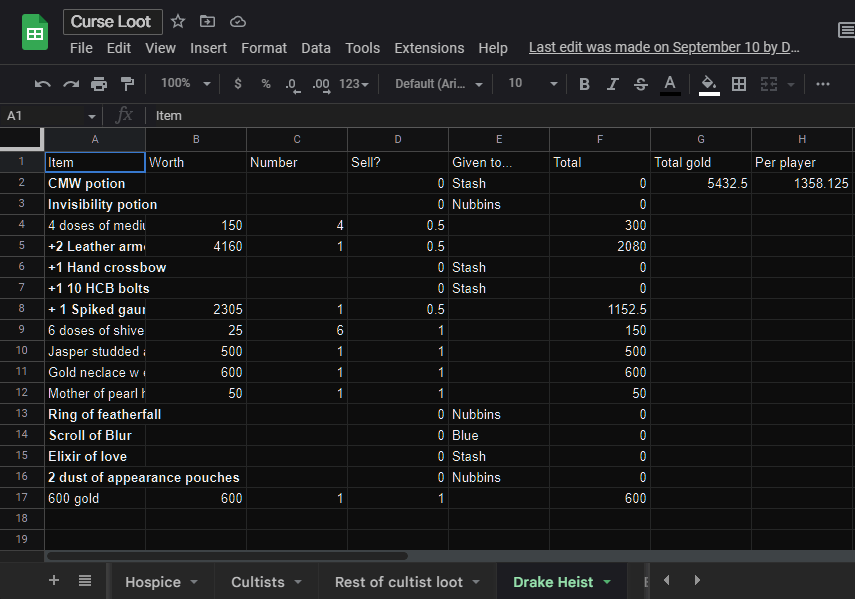
Even if no one wants to take notes, I’ll often insist that someone keep track of the loot. In my games, we do this via spreadsheet. It’s taken years, but we finally figured out the minimum number of things you want to track per item:
What was it?
How much is it worth?
How many did you get?
Are we selling it or giving it to someone? Who got it?
How much gold is everyone getting once we hit the pawn shop?
Screenshot of my group’s loot sheet for our Curse of the Crimson Throne game. Each tab covers what we got between our chances to sell stuff. We’re currently in book 5, so we have a LOT of tabs.
Can it seem like a lot to keep track of? Sure. But it’s also stopped several arguments about who got what, or the GM insisting we got X when it was accidentally skipped.
Streaming / Recording
This seems like an odd one to bring up, since wouldn’t you discuss this well before session zero? I’ve seen it happen a few times, though: Mid-game, someone says, hey, wouldn’t it be cool if we could put this on Twitch… Or, hey, we already have these recordings. Why not put them on YouTube?
This is a good time to get everyone’s feeling on this ever happening. Some people work in jobs where they don’t want their face out there. Some are in precarious personal situations. Some just hate how they sound or look in video.
So get everyone’s feeling on this before anyone starts dreaming, because this is an all-yes/one-no situation.
Audio / Video
And while you’re at it, check everyone’s audio and video. Even if you’re all in-person, things happen [waves frantically at the world circa 2020].
Quorum?
The hardest part of playing TTRPGs isn’t punching above your weight class: it’s scheduling. Life is busy. People work late, get sick, have other obligations. What’s your minimum group size?
Your first instinct might be to say “everyone is here or no one plays,” but that’s the fastest way to a dead game. A more nuanced approach is deciding what the minimum number is, and how you’ll deal with balancing for it. For my games, my minimum tends to be three players, and we balance by tossing in an NPC or two during fights so that I don’t have to redo all of my encounters.
You also need to decide what the missing player was doing. I strongly advise against anything that gives anyone IC reasons to snipe at the missing PC. It already sucks that they didn’t get to play with everyone. There’s no need to rub salt in the wound.
Food
Okay, this one feels dumb and obvious, but if you’re eating together, this one thing can make gathering super complicated. I’ve lost so much time during sessions because someone said “hey, is anyone else hungry…?”
So, during session zero, hash out food.
Does anyone have any allergies? Food restrictions?
How about other medical conditions? (Waves in hypoglycemia)
Are we eating during the game? Or should everyone grab their food beforehand?
WHERE are we eating (nothing like being told you can’t eat at the game table, only to find out there’s literally nowhere else with a flat, clear surface)
And the dumbest boring thing…
Dice.
Because people will die on the hill of using physical dice over the VTT roller. Best to know from the beginning, so you can tell them they completely misunderstood what ‘pseudorandom’ means.
Why the boring stuff matters
It can feel like so much of this is silly and pointless, and that it’ll work itself out over time. However, this is the kind of stuff that can derail a session, and I’ve seen some of these things end a really cool campaign well before its time.
When Paizo announced that they were releasing an Adventure Path set in the Crown of the World, my first reaction was to squeal MIMMIFS and immediately recruit a group. Let’s just say I’m super into a campaign where mammoth races could potentially be a thing.
The group
Because people will ask, the group make-up was:
Human Gunslinger
Orc Monk
Human Alchemist
Orc Battle Oracle
Elf Fighter
We opted for monthly play because everyone involved tends to be busy, and bi-weekly slots are precious. Only one person was new to PF2, and everyone had significant experience with TTRPGs. Hell, a few of them had even played in a wilderness campaign before.
The set-up
I decided to run this game with Automatic Bonus Progression, because it takes the pressure off of me as a GM. It means I don’t have to worry about players getting runes at the right time in order to keep balance, and they can save their cash for more interesting options.
I didn’t use Free Archetype because the AP didn’t explicitly recommend it, and none of the players were clamoring for it.
Otherwise, I had no limits, outside of anything tagged Unique. If it’s printed by Paizo, it’s up for grabs.
And… I decided to try something new.
Speed run!
I love the idea of running APs in non-traditional ways. While I still enjoy (and default to) running them as written, I’m drawn to the idea of mucking around with them. For this game, I pitched an idea to the players: SPEED RUN.
Rather than start at level one, players would start at the max level for that book. So, they start the game at level 3, at the start of book 2, they’ll be level 7, and at the start of the last book, they’ll be level 10. My hypothesis was that the players would blast through the first half of the book, but by the end, will be appropriately challenged.
I wasn’t doing this just because I could. My biggest concern with the game was that we could only play once a month, and one player was in a drastically different time zone, so would be staying up until WTF o’clock to play with us. I wanted to keep things moving at a decent clip without taking two years to finish one book. I considered streamlining the AP, but this can be tricky: Sometimes, that innocuous encounter comes up again later, so if you skip it, you could end up having to frantically backfill content.
I already spend enough time prepping. I don’t want to spend even more time re-writing.
In the end, it played out just how I thought: Players raced through the first two chapters, but by the last chapter, were appropriately challenged. This does mean players don’t get a chance to get used to their classes over time, though, so I’d only recommend it for a group with some experience.
So, how’d it go?
Warning: After this point, I will be spoiling with unfettered glee. Abandon all hope of a blind run, and that includes my players.
The book
In this AP, you play as members of the Broken Tusk tribe. The players are at the cusp of being accepted as official scouts, whether they’ve been with the tribe their entire life, or only the past few months. The main conflict is facing off with a rival tribe that they were once a part of, who have, quite frankly, lost their god-damn minds.
When Paizo said that this was a wilderness campaign, they were not joking. There are no towns, encampments, other tribes, magic shops, ANYTHING you can trade with during book one. You do find treasure, but if your group is loot hungry, it won’t be enough to satisfy them. Yes, crafting is a thing, but you spend much of the AP literally on the run. There’s no downtime to speak of, unless you want to risk coming face to face with your rivals.
While there were lots of fights, there were also lots of opportunities to solve conflicts peacefully. Nearly every encounter included a chance to recruit members to your following (something that becomes important later), or to walk away without a fight. If you have players who are always looking to avoid coming to blows, they’ll have lots of chances to stretch their social skills.
What’d the players think?
The players seemed super engaged with the plot, and quickly caught on that they were going to have to take the wilderness part of the story seriously. They also all agreed that without ABP, they would have been struggling.
Also, they hated, and I mean HATED, the personal antagonist. While the Burning Mammoths are the real danger, the face of them throughout the book is Pakano, a jerk from your tribe who defects to the enemy. Something about this NPC rubbed them the wrong way, and the normally peaceful PCs were thirsting for his blood. In fact, one told me that his eventual death didn’t feel badenough.
My thoughts
Personally, I think this is an awesome AP for anyone who’s up for the challenge of surviving in the wild and living communally. The only issue I had was that there was no motivation to explore, since you were being chased. Okay, the Burning Mammoths are way behind you and quite a bit slower, but the pressure is still on. One encounter was so far out of the way that I couldn’t imagine a group ever going that way, unless they were extremely cocky or obsessive completionists.
Even with ABP, loot is still very low, so if you have a hungry group, I’d recommend planting a traveling merchant somewhere, or establishing a crafter in the following who can provide certain items. You may even want to tweak the rules to make crafting on the run easier to do.
I didn’t push hard to get players to grow the tribe, since in this book, it’s not super important. They passed over a few encounters where they could have recruited someone, but this was mostly because they were focused on the task at hand. Having prepped book 2, though, I know I’m going to have to push them to get more people to join up. In fact, I’m going to put a rough counter on the start page so we can all keep track.
My recommendations
Automatic Bonus Progression, in case you missed that
Figure out crafting and/or shopping
Make sure players have their skills covered. There are lots of skill checks in this AP.
If no one is playing a healer, plan for that (or let the bodies hit the floor). Maybe a healer in the tribe, or a steady supply of discount healing potions?
Next book!
I just finished prepping Book 2, and I’m stoked. It has a small dungeon crawl (it’s Paizo, there always has to be at least one), and so many more opportunities for exploration and roleplay. If your players were annoyed by being chased, rest easy, because the Burning Mammoths are basically stuck behind an ice wall, giving players a chance to explore at their leisure.
I want to start off things on the right foot: When it comes to tarot, I am at best a dilletante. I got into it back when I was in high school in the mid- to late-nineties, when there was a resurgence in interest in anything “New Age.” I had runestones, crystals, decks of all kinds, books on numerology, reading palms and tea leaves. I had pretty much everything but astrology.
Ya girl was woo as hell.
These days, I view most of those things as interesting, but tend to use them as tools in creative pursuits or self-reflection. If you’re a believer, trust me, I don’t mean any of what follows as any sort of insult, but you may want to skip the rest of this post.
For those of you who are still here, let’s talk about tarot and RPGs!
Tarot and planning
While most of the games I run are pre-written, I also run games that are completely homebrew plots. For these, I’ve found that using tarot as a kind of prompt has helped me come up with scenarios that I may not have reached for before because I’m a bit of a softie. Tarot cards are not soft.
The idea behind a tarot spread is that you lay out cards in a pre-determined pattern, with each position having a different question, and each card having a different meaning. If a card is reversed (upside down) the meaning is going to altered (usually worse, but not always). There’s a lot more that can go into it, but for our purposes, this is enough to work off of.
My favorite spread for this sort of planning is the Celtic Cross. I don’t use it quite like you might find in any guide, since we’re not looking to tell a fortune. We’re looking for inspiration. I don’t even try to use all of the cards. I use the ones that stick out to me as being potentially interesting for the game to pivot around.
Resources
You’ll need a few things to get started. Thankfully, they can all be found for free or cheap!
Cards: I love using physical cards (they’re just so pretty!), but you can find all sorts of apps and websites that will let you draw a random card. Just make sure, if you choose an app or a site, that the drawn cards are sometimes reversed.
A guide: There’s so many books, sites, and apps out there to tell you what all the cards mean. Hell, if you bought a deck, it’ll come with a little guide. The trick is finding a good one that hasn’t gone soft. Some modern guides try to put a positive spin on every card, and some even leave out the reverse meanings. We are not here to give your players a good time. We’re here for mayhem.
A quick way to see if a guide is soft? Look for their interpretation of The Tower. If you think “Hey, that doesn’t sound too bad,” put it back and keep looking. The Tower is pretty much always bad. I’ve linked some of my favorite resources at the end of this post.
The layout: The Celtic Cross
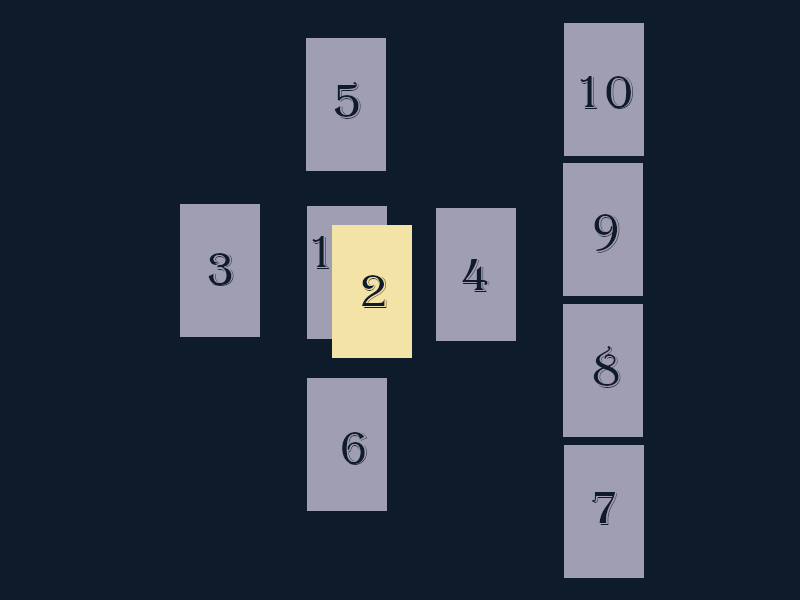
The Celtic Cross layout! Terrible graphic by me.
As I said before, I like using the Celtic Cross because it covers a lot of ground. You may get inspiration from an event you can introduce during the game, or it may remind you of an event in the past that you should drag up.
It’s a rather old layout (it’s first referenced around 1910, but it could be older? Or it could have been made up by the author. Tarot history can get wobbly), so you’ll find a ton of variations out there. This is what I came up with specifically for planning a game.
1: The current situation
This card is all about the status quo, or rather, a part of it. Is this aspect of ‘now’ something you can focus on? Maybe give players a moment to chill out in the present? Consider this card with the next card, which is…
2: An obstacle or challenge
This card covers the first card because it’s what is going to shake up the status quo. If the first card was a peaceful one, this could be what disrupts the calm. If the first card is gloomy and chaotic, this might be what makes it worse. In short, this card kicks the players in the pants.
3: The past
What happened in previous games, or before the game even started? Even if it’s the first session, a game has a past. The world existed before the PCs showed up (unless you’re playing a really out there system). This card might inspire you to bring this bit of history back for the players to deal with.
4: The future
What could be happening in the near future that you could drop hints about? This card deals with the immediate future. We’re talking weeks, not years. Unlike the second card, this is less a kick in the pants, and more a note that the players are scheduled to be kicked in the pants next month.
5: Current concerns
What are the players openly concerned about? A table of observant players are always worried about something. Someone finding that body. Losing position. That dragon finally showing up. This card might inspire you to press on something the PCs have openly worried about.
6: Secrets
Players also have things they tend to hide: A secret tryst, a worrisome bit of their backstory, a stolen trinket, a promise made behind closed doors, hidden feelings… What’s going on beneath the surface? This card might inspire you to drag that morsel into the light.
7: Advice
This one is pretty straightforward: What’s a piece of advice or a request that could be made of the PCs? I like working with this one because it can get the PCs moving in a completely different direction than they’re used to.
8: NPCs
Most games have a number of NPCs knocking around, doing their own thing. If this card reminds you of one of them (or a group!) maybe it’s time for them to come back and poke the PCs some.
9: Hopes / Fears
What are the players striving for, and what are they running from? If this card plays into your player’s deepest fears or furthest hope, now might be the time to play on those. After all, a fear isn’t worth anything if it never happens, and hope is for naught if it’s always just out of reach.
10: Outcome
Is this something you could hint at happening (especially in conjunction with one of the other cards)? If it’s good, you can use it as a carrot. If it’s bad, it’s what should be avoided. This card should not be taken as a given, since it’s only one of many possible outcomes. Players still need to work towards this if it’s positive, or against it if it’s a negative outcome.
Reading time!
Once you have your cards laid out, write down all of the positions and meanings, then start looking for things to jump out at you. I never use the whole reading, but rather pick a few cards that give me an interesting direction to move in. Maybe they’re evocative… but maybe they just remind me of something I’d been meaning to return to from a previous game.
I do recommend resisting the urge to do another layout if the current one doesn’t appeal to you. When you do that, it’s often because you’re looking for something safe, and that’s not why we’re here. We’re here to shake things up. So spend some time pairing up different cards/interpretations to see what might take your story forward in the most interesting way.
A sample layout
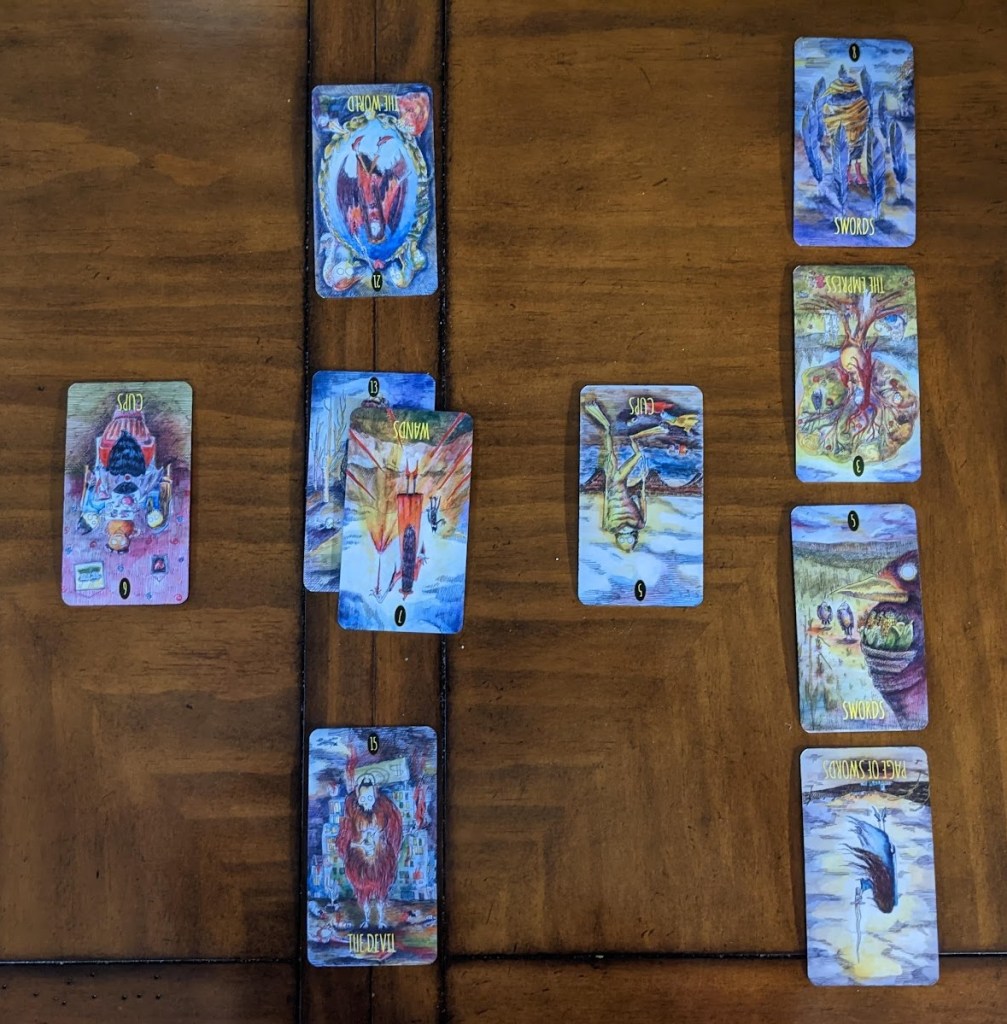
I tend to use this layout the most with my VTM games, since those tend to be less tightly plotted. Vampires have a tendency to make their own problems, so it’s often wiser to just set up a situation and see how kind the dice are to them that evening. This is the layout I drew for them:
The deck, if you’re curious, is The Shadowland Tarot by Monica Bodirsky. Also, my 14yo upon seeing the spread: “Sucks to be them…”
First, I did a quick and dirty reading, which was just me writing down the cards, positions, and some of the meanings that stood out to me.
Position
Card
Meaning
Interpretation
Situation
Death
Endings, change, transitions
I tend to run games in arcs. Could the game be ready for the next arc?
Obstacle
7 of Wands, Reversed
Exhaustion, giving up, overwhelmed
Has someone been pushed to the brink recently? Could we get them there?
Past
6 of Cups, Reversed
Living in the past…
Maybe an older vampire… One who’s been mentioned before?
Future
5 of Cups, Reversed
Personal setbacks, moving on
Once again, maybe the players are meant to be moving on to a new arc…
Current concerns
The World, Reversed
Seeking personal closure
Are there any personal plots that the players want to see wrapped up?
Secrets
The Devil
Addiction, restriction, sexuality
Maybe poke the players’ baser natures, which they spend a lot of time repressing
Advice
Page of Swords
New ideas….
Someone could prod them to go in a new direction?
NPCs
5 of Swords
Conflict, winning at all costs
Could that old vampire be looking to win at any cost?
Hopes / Fears
The Empress, Reversed
Dependence on others
Absolutely something the group fears. Play on that.
Outcome
8 of Swords
Imprisonment, negative thoughts
So the stick rather than the carrot: Something to work against, since the group tends towards being hopeful
After writing down all the meanings, I realized that I probably should kick off the next arc, which I’d been putting off. So many of the cards pointed towards change, decisions, and showdowns. In the end, it worked out perfectly: A (very, very) old Kindred showing up in town came looking for a place to settle (conquer), which kicked the crew into high gear. They were forced to band together and make some big decisions. Not only did they have to decide what to do with the old guy, but they had to decide what they, as a group, stood for.
Sure, I could have read the cards differently, but this methodology is all about inspiration and letting a mix of chance and context take you to new, interesting places.
Favorite Resources
One would think I’d have a ton of books about tarot cards, but when it comes to interpretation, I tend to prefer apps and websites.
Biddy Tarot: I use this site for card meanings, but also potential layouts. For quick readings, I love their list of three card layouts. They also have a great run-down of the Celtic Cross spread.
If I’m on the go, I use the app from Labyrinthos. It has a good database, and you can do a layout on your phone (and yes, it has reversed cards!).
The book that inspired me to use tarot for game planning was Corrine Kenner’s Tarot for Writers. A great book with some alternative layouts that are geared towards plot rather than traditional readings.
If I’m at my desk, I use this absolutely baller Google sheet (via Reddit) by u/adlist for looking up meanings, grabbed from various sources.
Physical cards: 100% optional, but if you decide to get a deck, make sure you get one with the traditional cards. That means 78 cards, major and minor arcana. There’s some decks out there that have their own system, which is fine, but I find that traditional cards Rider Waite set to be the most varied. Llewellyn Publications makes some super nice sets, and tend to be my go-to.
An alter cloth: Even if you’re not into new age, there’s a very good reason to get a piece of cloth to read on: It protects your cards. You don’t need anything fancy! I’ve used t-shirts and dishtowels when I’m not sure if my my table is perfectly oil-free.
Oh, man. The hated GMPC. IF you’ve been playing TTRPGs for more than a few years, you’ve probably run into one. They’re overpowered, they grab up too much of the plot, they take away the agency of the players. r/rpghorrorstorries probably features at least one a week. And yet…
They’re kind of a useful tool? As long as they’re not run by a complete tool, that is.
Personally, I like having a GMPC on the board, but you have treat them with a super light hand. Done right, they can enhance your game, lead to happier players, and give the GM something to do when the PCs are just hanging out.
What’s a GMPC, and do you need one?
TTRPG games assume you have a ton of NPCs rattling around, but a GMPC is slightly elevated. They’re an NPC who sticks with the party, and (ideally) statted and geared at the same level as the PCs. They’re basically a party member that the GM controls.
While I do like using them, not every game needs one! Times when I decided to add one:
The party is small, and we’re running an Adventure Path. APs are built for a balanced party of four, and I don’t want to spend a ton of time adjusting it.
The players know what they want to play, and there’s an obvious gap. As a GM, I tend to run long campaigns, so I’d much rather a player play off a sheet they’re happy with, rather than one they wrote up because “someone had to play the X.”
You have a player or two who sometimes can’t show up, because being an adult is complicated and hard. It can be useful to have a GMPC hanging out in the background who can step in. Sure, you could just run that player’s character, but then you get into the weird gray are of the PC knowing stuff the player doesn’t.
Times I wouldn’t add one…
You want to play, too! I mean, this isn’t the WORST reason to bring a GMPC, but it’s a dangerous road to go down. You know too much about the plot, and players might feel pressured to defer to you.
You want to use them to move the plot along! I mean, it’s a nice idea, but in practice, it can lead to players feeling like accessories to the plot. Leave the plot hooks at the bar, nursing an ale.
You have this awesome idea for a character concept and you’re the forever GM so just this once… Honey. No. Like, this might be fun for a one-off NPC, but a better long-term solution is to start working on getting one of your players to GM.
Your players don’t want you to add one. Even if their party make-up is whack, even if you know Tom is going to flake, even if it’s just three people… don’t add one.
GMPC Best Practices
So, your game could benefit from a GM and the players are on-board. How do you make sure this doesn’t get weird?
Don’t make them the center of the plot
The figures at the center of the plot should always be the PCs. Even pre-written adventures (and I run a ton of them) tend to put the PCs at the center of the action and hope that they’ll grab the hooks they should in order to stay there.
Yes, it’s tempting to make them the keeper of all the hooks, but that starts to take agency away from the players as they feel like they have no option but to say ‘yes’ to everything this one dude asks of them.
That said, you don’t have to have them be a cardboard cutout that sometimes swings a sword. You should absolutely…
Give them motivation
Sure, the players can just offer them a cut of the gold and leave it at that. Some may even prefer that. Personally, I like to give the GMPC a solid reason to stick around. Some options:
They believe in the cause. This is a good option if the PCs are doing something where money isn’t the best motivator (think overthrowing a corrupt regime). The trick is that they should view the PCs as the decision makers, deferring to them unless they’re needed as a tie-breaker.
They have their own thing going on. You can have a lot of fun with this one. They’re writing a cookbook and are on the hunt for novel ingredients. They were working on their autobiography and realized it was dull, so they want to spice it up with some adventure. Whatever deity they have encourages them to give in to wanderlust / go into hidden places / etc., which happens to mesh with what the PCs are doing.
They’re a professional adventurer. Many systems have some sort of ‘adventurer guild’, so why not let that work for you? They’re out there to get clout and experience, and hey, your group seems no worse than the other chaos monkeys back at the tavern, so why not buddy up?
Don’t go against the grain
Is the group a bunch of Paladins set out to Do Good? Don’t give them a CE troublemaker. Are they, in fact, the trouble in the world? Don’t give them a paladin. The GMPC is there as grease for the machine, not a monkey wrench.
Make them optional
When I have a GMPC, I make it very clear to the players that they are ALWAYS optional. The character won’t even be mad if they’re asked to stay behind! They’ll go do paperwork / some writing / shopping / whatever feeds into their motivation. If the players decide to permanently part ways with them, it’s with no hard feelings.
They’re also optional for me. Now, I’ve never had players do this, but I know there are players out there who would look at an ‘extra’ character and see them as expendable. If the GMPC dies, there’s no free rez, and the party can’t just run back to town and get a new one. I won’t block the party forever, but it may take several sessions for them to gain a new murder buddy.
Don’t go overboard on the build
How do you build a GMPC? If I’m the one maintaining the sheet, I tend to load up RPGBot and go with the most basic build for that class. That way, the character will be effective without outshining the players, who have spent WAY more time thinking about their sheets.
Another option is to give the sheet to the players and have them build it. Will it be more powerful? Sure. But in this case, this is what they wanted.
Another option, if you’re playing Pathfinder: Iconics! Another upside to this as that they come with backstories and personalities, which can save you time if you’re working on a tight schedule. Also, you can download the pre-built sheets from Paizo, which is great if you’re adding a GMPC at the last possible moment.
Final thoughts
At the end of the day, I want to emphasize this once again: A GMPC is a tool, and like any tool, it has its uses and misuses. It should be used to enhance a campaign, and removed as soon as it starts to hurt it.
Note: Hilariously awkward portraits rendered by Deep Dream Generator‘s Text 2 Dream service. Prompts provided by me.
I’m a huge fan of Paizo’s Adventure Paths. I’ve run them, I’ve played in them, and I have a list of APs I want to play in that’s inadvisably long. Many players, however, prefer to run homebrew stuff, so they tend to ignore them, thinking there’s nothing for them to use there. What they may not know is that APs are often made of scenarios that you can yank out, file the serial numbers off of, and jam into your campaign.
So, what can you rip out of Agents of Edgewatch?
Important note: If you had any hopes at all of playing in AoE without being spoiled, turn away now. I'll be sharing many of the extremely significant scenarios in the AP.
Book One
Because the first book has the fewest ties to overarching plots, this is the easiest book to grab from. While every book has something to steal, this one has so many great things to snag. In fact, if you had to pick just one book to buy and rip apart, this is the one to grab.
Knight’s Marvelous Menagerie
In this scenario, the players deal with a petting zoo that’s lost its damn mind. The kicker is that the animals are being poisoned, but you could swap this out for so many things: A disease spreading through the area, some druid who’s gone off the rails, ghosts… whatever suits your plot. The end goal is to subdue as many creatures as you can without killing them and find a cure, which can easily take up a 4 hour session.
And, best part? It’s no longer necessary to kill off two adorable NPCs who are murdered off-screen. Knight and his ladylove vet can become regulars if your players are into that sort of thing.
Dragonfly Pagoda
A breakdown in worker compensation leads to a bunch of kobold contractors taking over a spa. This is a super interesting scenario where there’s so many ways players can approach it. Do they sneak past a dozen traps and try to subdue the kobold’s quietly? Do they take the side of the workers and find something more fair for all parties? Do they go in with swords swinging and leave a trail of bodies behind them?
Also, at the end of all of this, the PCs have a nice bath house! Trust me, they’ll find ways to use it when they feel like relaxing, or kicking off a little romance subplot.
House of the Planes
This is less useful as a scenario, and more useful as a super cool bar. Each room is themed around a plane. The NPCs detailed here are a ton of fun, and it would be a great place to toss players for grabbing hooks, clues, or just seeing what interested them the most.
It also introduces the owner of a local rag, which could be an interesting addition to your campaign. The newspaper plays a minor role in reporting the actions of the PCs throughout AoE, and if you have the creative juice for it, could be a fun way to give your players an spin on how the world at large might see their actions.
The Murder Hotel
As a True Crime fan, this scenario had me cackling. It’s clever, it’s dangerous, it’s creepy, and it’s based off of a real-life murder hotel. Trust me, anyone in your group who follows True Crime will have a moment where they say WAIT, I KNOW THIS ONE.
Because your PCs are the ones to figure out what’s going on once you get in there, it can be something you drop into any campaign where the players are in a reasonably big city with a fair number of people moving through it.
Book 2
Every Paizo AP includes a book that might as well be called “the one with the dungeon.” For Agents of Edgewatch, that’s book two, and it’s a super good dungeon. Expansive, including several levels, a broad variety of creatures, and it’s not so bespoke that it can’t be pretty much anywhere.
This also would be a book where I’d grab the book for the maps and print them, or just skip straight to getting the module on whatever VTT platform you use. Setting up the lighting for this dungeon was no joke.
Book 3
If you have a group with a face or a sneak who is tired of everything being a fight, I highly recommend grabbing the casino encounter from the second chapter of book three. It’s a heist, where the players have to infiltrate an upscale casino in order to get information and find (or rather, not find) a MacGuffin. Need to get some info to your players and they keep refusing to talk to that one bartender who knows the deal? Pass it via one of the many guests there. Need the players to get their hands on something vital? Put it in the footlocker where they’re supposed to find AoE’s MacGuffin.
There’s a huge lead-up to to the heist involving planning, so you can easily get several sessions out of this chapter. Players can choose their approach, getting jobs as staff or entrance via the rumor mill or sucking up to local celebs. It’s absolutely something where you can give them their options and then go catch up on your reading while they debate amongst themselves.
Book 4
Chapter 3 has a creepy carnival. Why do you need a creepy carnival? A better question is why haven’t you included one in your game yet?
Running around the carnival, the players are trying to find a madman who’s leaving behind Harrow cards, which adds another layer of creepy. The only thing I’d change, honestly, is the ending, which is extremely AoE specific. It’s easy to update, however: Swap out a trap for a fight, and you’re golden.
Book 5
The second chapter of book five includes an awesome map that’s made of ships. Like, six of them, each with three levels. There’s places to cross, to jump, and hell, I’m sure someone could break out their Drive lore and make some chaos.
The creatures included aren’t too spicy, so really, could work with most adventures. All you have to do is give them a reason to go mess about on ships, and a way to get there. Just be familiar with how you might split players to different levels if needed (Personally, I’d put all of the maps on one page if you’re using a VTT, but that’s just me).
Book 6
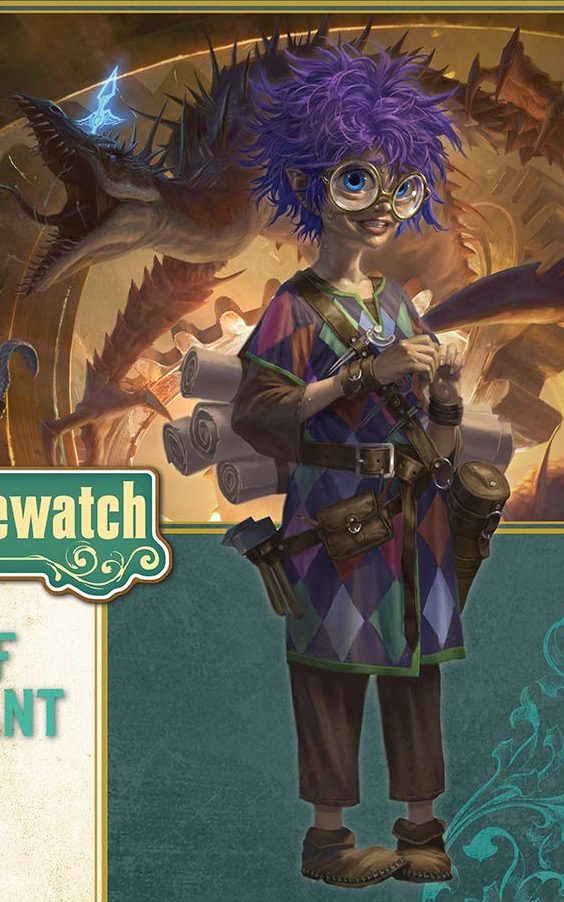
The cover of book six features a gnome who I was very distressed to learn was a major enemy. He looks awesome! He absolutely looks like someone I’d recruit to be in my party! Is he evil? SURE. He’s an angry architect. Who hasn’t been mad while working a desk job? And he’s redeemable. If you rescue anything from this book, make it this guy, who I’m sure the party could have a ton of fun getting to know and turning to the grey side.
LOOK AT HIM. LOOK AT THAT FACE. LOOK AT THOSE FEET. AND WE STAN AN ARGYLE KING.
To be honest, I would use Blume as a quest giver who has a ton of money and might be a tiny bit unhinged. Hell, maybe he lets the PCs set up shop in an unused wing that’s full of ‘creative’ architectural details. Think Winchester House if it were mildly sentient.
What did I miss?
I’m sure I skipped over an encounter that could be fun to run for players (I ran only about 70% of the AP in a West Marches setting), so comment if there’s one that should be included! Next, I’ll be pulling apart an older AP: Council of Thieves!
As my cohorts and I are wrapping up three years of running a West Marches game using Pathfinder 2e, and I thought I’d do a brain dump about what worked for us, and what didn’t. This isn’t a guide that’s set in stone: Different approaches will work for different groups, numbers of people, etc.
This isn’t necessarily 2E specific, but it becomes necessary because Paizo is a never ending source of system updates. New stuff is coming out constantly, and players will always want to play with the new things. At first, we considered telling players they could only change some things, but then realized we would get overburdened with paperwork. So, we told players that they could basically toss the old sheet (except for stuff they bought and the character’s personal history) and make a new one.
Whenever a major book came out that offered updates that you can’t train into (like ancestries), we offered every character a respec point. A few times we offered a meta for the server, but for the most part, it was up to players to explain why they were suddenly a strix, if they chose to explain it at all. Once a player used up that point, they were stuck with that sheet until the next time we handed out points. Also, characters never had more than one respec point, so that cut down on what we had to keep track of.
Surprisingly, being extremely permissive didn’t lead to any huge headaches. Players rolled with the changes, and they often lead to interesting plots as the PCs coped with their new forms. It also got players re-engaged with characters they may have ignored for a while, since they now had interesting new mechanics to play with.
Rewards and gold
Items and runes are incredibly important in PF2e. The math assumes that you’ve been upgrading your stuff as you go, and you’re expected to have a few useful potions on hand. Rather than worrying about giving out items for games, we just gave players a flat amount of gold, based on level.
One thing we discovered at the leaders level was that the math wasn’t perfectly linear. There’s several jumps where gear becomes much more spendy. If the only way players can get gear is gold, then we needed some math to accommodate for that.
After much tweaking of numbers and checking data, we landed on the following equation: Each game got a set base reward, plus an additional amount that was the APL * another number. To put it in math terms:
gold = base + multiplier * APL
And the values we came up with:
APL 1-5: Base 15, multiplier 5
APL 6-10: Base 75, multiplier 25
APL 11-15: Base 250, multiplier 80
APL 16-20: Base 1000, multiplier 500
So, if you were a group of level 16 players, your payout is 1000 + 500 * 16, so 9000 gold. Level 3? 15 + 5 * 3, so 30 gold. Yes, this can feel like a lot of money! However, we had to keep in mind that some players could only make one game every month, or every other month.
I do think these numbers are super solid (we never had to tweak them again). However, I’m also open to giving all players a ‘base salary’ and just giving a multiplier for the games attended. I do think there should be some reward for attending games, but keeping track of physical items can be difficult if you have more than one GM. After all, GMs vary a lot when it comes to how permissive they are.
So what happened with the players who were flush with cash? They often indulged in buying things that many cash-starved players will ignore: Consumables. I know in my regular games, players tend to wait until they find them in the wild to actually grab them, or they get an archetype that allows them to make them for free. But if you have a pile of gold in your aresenal, why not grab some Antler Arrows?
GM compensation
Because items (and therefore gold) are super important, we decided that when someone ran a game, they would get the same gold as the players. This became super important early on, when we had fewer GMs running games, so the active GMs couldn’t actually gear up their characters.
Some GMs always remembered to pay themselves, and some only went back and grabbed the cash when they were low. We didn’t really notice any imbalance, and it seemed to be a fairly transparent way to reward GMs that didn’t lead to feelings of favoritism.
Variant rules?
PF2e comes with some great optional rules to help it adapt to any table. As time wore on, we found some rules that helped to cut down on the paperwork. Others, we avoided, but I’m open to using in the future.
Free Archetype: Everyone always asks about this. Players love Free Archetypes. On this server, we didn’t use them. I’m not opposed to them, but it didn’t quite fit the feel we were going for. On my next server, I’ll probably allow a limited number of them. This comes down to GM style, since FA can lead to a bit of a power creep, but can also be useful for GMs who want a certain feel for their server. I’m definitely eyeing the ones that could work for a game based around a Pathfinder Lodge.
Automatic Bonus Progression: I’ll be honest: If I’m GMing, this is now a ride or die rule for me. We adopted it because PF2e assumes that players are geared up in a certain way, but if a player couldn’t make as many games, they wouldn’t have as much gold laying around. ABP makes that much less of a worry, since it gives the base runes and bonuses for free. Sure we still had people running around with stupid amounts of money, but more often than not, we saw the rich players buying things for others.
Let’s go shopping!
Early on, we established the home base as a town that was ‘big enough.’ For levels 1-4, players could buy any item up to level 4. After that, they were capped at their current level. This helped players who could play more from getting too powerful.
Also, to cut down on the amount of admin work, we allowed all items but unique to be purchased. If it was written by Paizo and it had a price tag, have fun.
One thing we missed until the game was almost over was that “Access” on an item didn’t make it inaccessible. It made the item one level hard to get. So, if it was a Common Pathfinder item, it became Rare. Oof. Lesson learned.
Balance?
One of our biggest concerns going into this was balance. How do we make sure that a party is balanced in such a way to deal with whatever encounter they’re sure to face. Should we only pick monsters once the players signed up? What do we do if we have a group that shifts around at the last minute? What if we don’t have enough healers or tanks?
Shockingly, balance wasn’t something we had to be overly concerned about. As long as players adjusted tactics and built flexible characters, things were fine. Sure, there were some hairy situations, but over god-knows how many games, parties ended the session with everyone on their feet.
Some things that became super important:
Healer’s gloves. OMG. Everyone had a pair of these. Some bought a spare and kept them in their bag.
Battle Medicine. This, too, was vital when it came to keeping everyone on their feet. Many players made sure to keep their Medicine skill up, as well.
Buy a damn ranged weapon. Sometimes, the solution is to keep your distance and kite the hell out of something.
Keep one of every ‘healing’ thing in your bag. Potion. Anti-plague. Antivenom.
Keep one of every mundane damage type on your person.
This is part of why having players with so much gold didn’t bother us: It let players build up an arsenal that let them take on pretty much anything, as long as it was at their level.
We also had NPC healers in town who could remove whatever ailed players, since it was never a given that PC healers would log in every day. No one wants to kill off Bob the Fighter because June the Cleric was backpacking in the Rockies for a week.
So, is PF2 good for West Marches games?
Personally, I say yes! It works exceptionally well when it comes to West Marches!
The rules have very few places where the GM must make a call, so it’s easy to keep every GM on the same page.
Encounter creation is fairly easy to do, while still offering a ton of options so things don’t get repetitive.
While the game is balanced on a dime in many ways, it’s more flexible than some might expect. You don’t need a perfectly balanced party to survive.
All the rules are online, and there’s inexpensive character builders to be had. This means players (and even GMs) can join without having to lay down serious cash.
Way back in the long before, before the world turned into a flaming dumpster fire, I was approached with the chance to do something I’d want to do for a long time: Start up a West Marches server. One thing that had been stopping me was the effort that goes into recruiting players and finding like-minded souls to help GM, but this one would be attached to a stream and existing community.
So… why not?
Two and a half years later we’re planning on winding it down when we hit the three year mark. The players will be hitting level 20 soon, so it feels like a natural time to close shop. I’ve done large scale games before, and one thing has been true with each one: Everything dies, but it’s on you to decide if it’s via entropy or explosions.
Now that we’re approaching the end, I thought I’d write about lessons learned, because boy, I learned a lot. The large games I’d run before had been mostly play-by-post (PBP) and been under the Amber system, which is a completely different animal. They’d also had a more stable player base (again, nature of the community)… and also didn’t happen during a freaking pandemic.
Leveling system
When we started, we gave out XP every month based on how much everyone had chatted. Seemed sensible: It encouraged people to talk to each other, and players who had been around longer would have more XP, which seemed a fair reward for joining earlier. When we added alts, we decided that players could choose how to allocate their XP between their three characters.
Over time, however, level spread became a huge issue. Games would either not make (not enough people with a character at that level available at that time) or people wouldn’t be able to play a character that month (GMs were already spread thin). Some of us found ourselves running double the usual number of games just so people had a chance to play that month. Some players wanted to rush to 20, but found they didn’t have enough fellow players hit the minimum for a game.
In the end, we switched to a banding system: Every character on the server got a set level of XP, leaving us with only three levels to plan for. This made planning so much easier. I could easily plan three encounters without having to worry about scaling. There were always enough PCs bumming around to make games happen.
To be honest, in the future, I probably wouldn’t worry about chat XP, but instead, set a steady rate for leveling (maybe a level every other month?). Or, maybe set milestones, so players can race towards the next level, or choose to screw around at their current level a bit.
Alts
We introduced alts because PF2 had so much stuff coming out (seriously, when we started, the only thing out was the Core Rulebook). Alts allowed people to try out these new classes and races. It also gave people a chance to shake things up, if they were bored of their current character.
There were upsides and downsides to alts, though. Some people loved having more characters, but some really only wanted one. It also meant more characters to remember and engage with, even as a player. I won’t say it was bad, but it’s also something I probably won’t bring into the next server I put together. Instead, I’d rather have a mechanic that allows players to explore different builds if they want, and let people retire characters more often.
Respecs
Respecs became very important on the server as more and more cool stuff came out. There was some initial discussion about how much we should allow, but I was wary of anything that forced the GMs to look over sheets. Admin work can be killer, and looking at sheets can be arduous. So, our only rule was that your history stayed the same, but everything else could change.
This is something I absolutely will be allowing in every server I run. Hell, I’ll probably allow it for every home game: If a big book comes out, feel free to change anything you want. We just have to figure out the meta for it (and the fey are always an excellent excuse).
Time Zones
I don’t know who decided that the earth should be round, but that was a terrible design decision.
I kid, but… it’s also kind of true? Having time zones that are far apart lead to resources being spread thin. It lead to clusters where it was hard to get cross-pollination of players. It lead to hurt feelings. And hey, maybe we were just a weird collection of variables where it didn’t work this time, but worked well for others. If so, awesome! But, in future servers… I’ll probably keep player slots to those who can work with a more limited number of time zones, rather than pushing for 24/7 gaming possibilities.
Establishing jobs and expectations early
Running a West Marches game is absolutely a team effort. Maybe some people make it work with just one leader/GM, but once you hit a critical mass of people, you need people to help you keep it going. At a minimum, you need more GMs (trust me, I was solo GMing the server for a bit, and it was rough). It also helps to have other rules experts who can help make tough calls, and people to help out with the admin work, like looking over sheets.
Balancing this can be tricky, because enthusiasm makes you feel like you can do literally anything. This was especially true during lockdown, because hell, what else were we doing with our lives?
But, even if you’re still not going anywhere [ waves in permanent remote worker ], enthusiasm will eventually wane and become a normal level of interest. If you don’t want to burn out, you have to be reasonable in what you commit to.
I do think we established some good division layer at the top, even if the roles were fuzzy. We each had our own areas of expertise, and big decisions came to a vote. Below that, though, things weren’t quite as clear. I absolutely didn’t want to put any pressure on GMs ever (I was grateful for every game they ran, since that took the pressure off). However, we probably could have put some guidelines out there, like expecting GMs to run a game a month, or something like that, or what time zones people would cover.
Scheduling
We went through a few phases of how we do scheduling, and I’m still convinced that the right solution depends on how many people you’re working with.
Hella old screen shot of polling
When the server was smaller, polling worked great. Toss up some times, have people react if they’re interested. When I started having to make several games out of one poll to get things to work out, we switched to a sign-up sheet. That worked great as well, though sometimes we had to prod to get things to fill up.
Which solution would I use in the future? Eh, hard to say? Calendars are hard. Humanity has been trying to figure them out for 5000 years and still there’s start-ups out there that want to “fix” your schedule.
Will I do it again?
I mean, if you missed the context clues of me saying “next time” over and over, of course I’ll do it again. I loved running a large server and having a chance to see all sorts of groups of people play together. While I also love a dedicated table, it is fun to watch how characters interact in different groups. It’s neat to watch them build relationships outside of their ‘core’ group. And, well, I don’t have enough hours in the day to game with all the people I’d want to game with. And, as a GM, it’s nice to have a simple encounter idea that I can toss out there and see what a round group does with it.
It won’t be attached to a show (while that was fun, it’d be nice to completely control the meta), and it likely will be a smaller crowd (though still big enough so that not everyone can sit at one table at one time). But I’ll absolutely throw my hat into the ring again. I’m just going to need a chance to replenish my energy reserves first.
I love Paizo APs. Like, adore them. I think they’re one of the best parts of diving into the Paizo culture: Ready-made adventures with tons of maps, NPCs, creatures, and twists that still give players a huge amount of freedom to do what they want.
The maps, though. Oh lord.
The older APs weren’t built with VTT in mind, so the maps tend to be quirky: Great for print, bad for VTT. Damn near impossible to rip out of a PDF. A grid that doesn’t align to a grid. While the later PF1 APs improved a bit, the earlier ones can be a headache. However, the APs are absolutely worth running, so here’s how I reduce (not obliterate, I’m not a VTT miracle worker) the pain.
Spoiler warning
In order to make a post about old Paizo maps, I have to use old Paizo maps. I’m going to be using the maps from the Council of Thieves AP, since it has some fairly complex maps in it, and it’s what I have on hand. So, mild spoiler warnings for an AP that’s been out for over a decade.
Extract the maps
I’ve tried so many tools for extraction, and if you have one you like better, you do you. The one I tend to come back to, though, is TokenTool from RPG Tools. It’s made for tokens, but you can also use it to get maps out. I’ve tried a bunch of tools, but this is the only one that seems to get the images out without too much struggle.
Step 1: Clear your screen
For some reason, we start with a gear token and a lady doing yoga. Let’s get rid of them (or whatever you were working on previously).
What you see when you load TokenTool
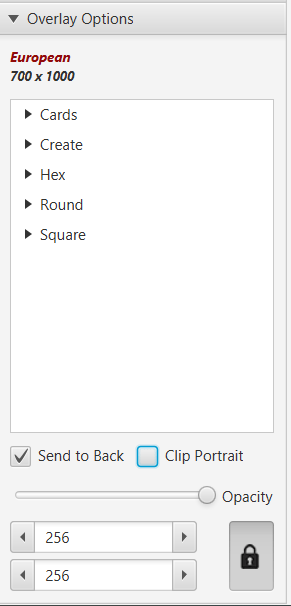
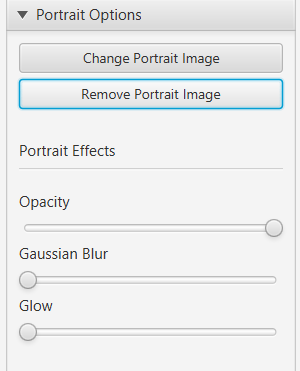
On the right-hand menu, make sure you have “Overlay Options” expanded. Click “Send to back” and deselect “Clip Portrait.”
Now, we want to open the PDF you’ll be grabbing maps from. I’ll be honest: This part can be a wee bit clunky, so I recommend putting on a podcast and grabbing all of your maps in one go.
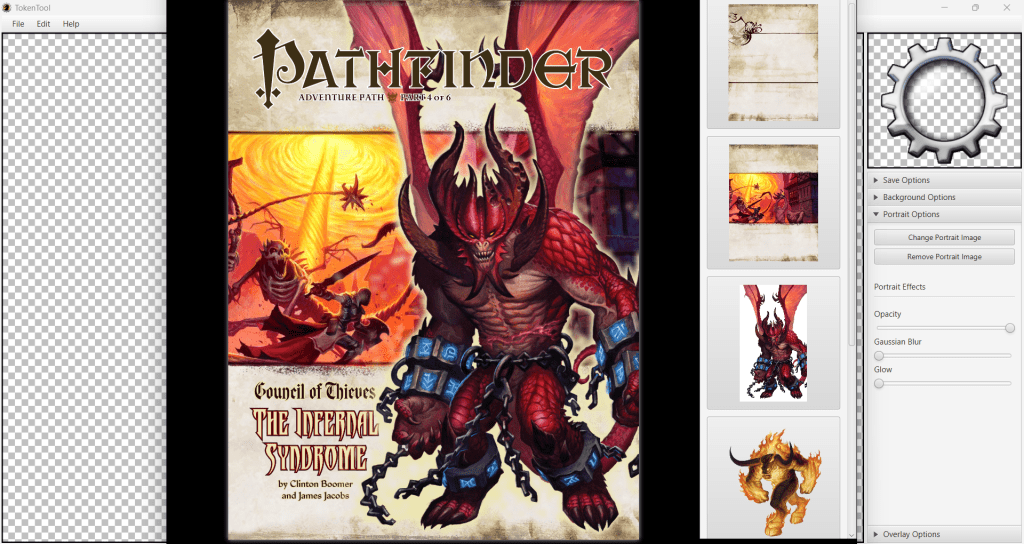
When you open a PDF in TokenTool (under File, or using Ctrl+O), the PDF will appear on in a new window, with two panes: The left-hand pane is the page of the PFD, and the right hand contains all of the images on that page. To get to a new page, scroll over the left-hand pane. No, there’s no jump option (that I could find), so some patience is a virtue here.
Book four opened in TokenTool
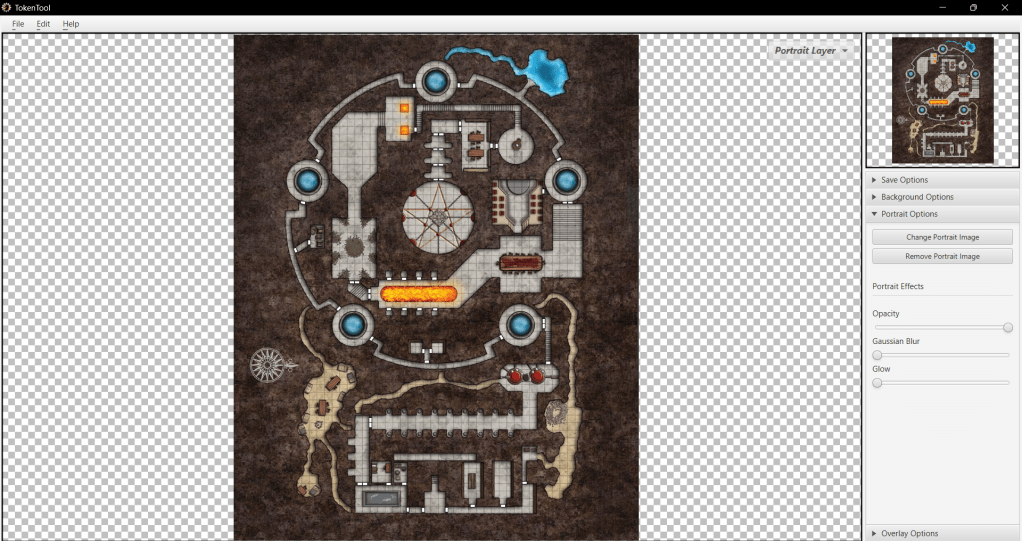
Once you get to the page with your map, click on the right map to insert it into the main TokenTool window. Now, this is important: When you export the image, the image will be cropped to what you see in the preview window. So make sure your whole map is showing by scrolling in or out!
A properly scrolled map!
Now, save. And maybe go get the rest of your maps while you’re there, since the PDF window is probably still open.
Upscale!
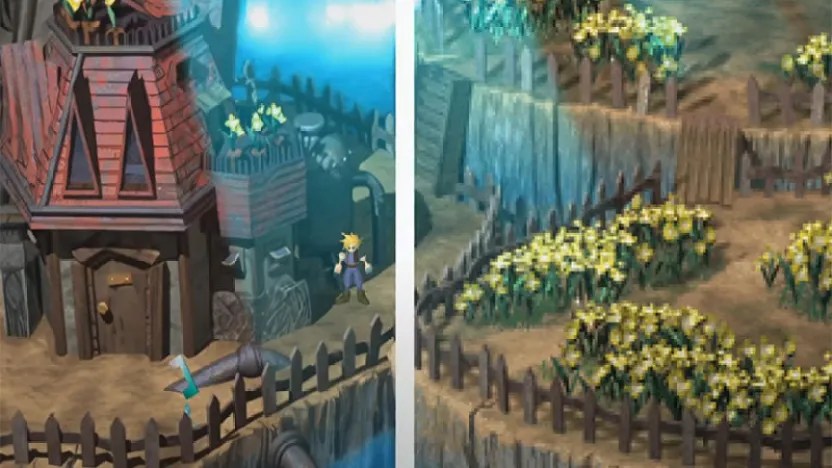
First, let’s be clear on what “upscaling” is. It’s not just “making the image bigger.” It’s doing so with some intelligence (specifically, Machine Learning). A great recent-ish example of this is the fan-mod for FF7 original, where someone upscaled the textures.
FF7 comparison, via Kotaku
There are many, many tools out there for upscaling. The one I’ll be using is from Icons8, mostly because I can pay $0.20 per image rather than paying a monthly fee. Given that most APs have only a handful of maps, it’s well worth the investment for me.
All you have to do is upload your map, and Icons8 will do the magic! I do recommend upscaling to 4x, since 2x is still a bit too small for most VTTs, if your players like to be zoomed way the heck in.
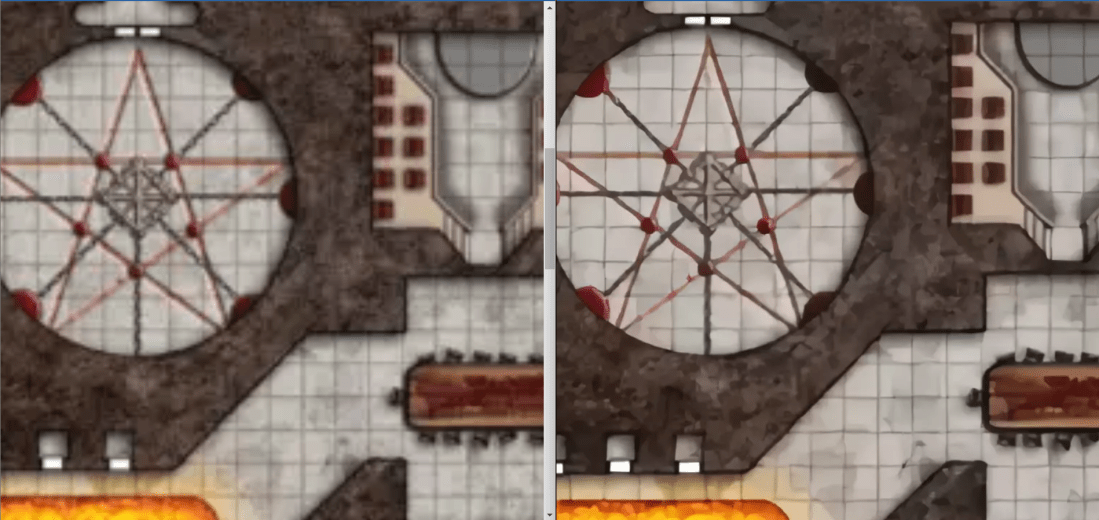
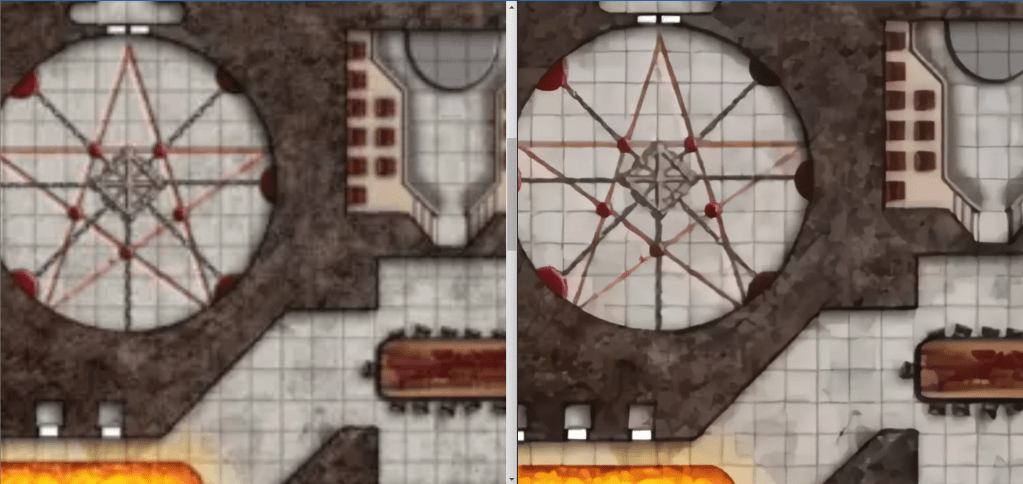
Left: Original. Right: Upscaled.
Some notes: It’s technology, not magic, so it’s not perfect. The end result for most maps tends to look like someone painted the map with oil paints, which I kind of dig. If it really, really bugs you that the chairs are wonky, at least you have a better image to work from.
That darn grid
Some people aren’t going to like this tip, so I’ll go ahead and put it first: Get the grid somewhat lined up… then turn it off.
For most VTTs, this doesn’t mess with measurements, but you will have to warn your players to stay ON THE GRID. For the vast majority of players, this isn’t a huge problem. Yes, there are all sorts of finicky tricks about how to get the grid to line up perfectly, but this post is about decreasing heartburn, not making new and interesting heartburn issues.
If most of the grid fits, but one or two rooms are off, cut them out, and place them on the map layer, one by one. Nudge them around until they line up well enough. If you’re using dynamic lighting of some kind, chances are your players will never notice the seams. If they do, give them a Hero Point or something to make up for shattering the illusion that they were really in a dungeon.
Note that I recommend doing this on the VTT itself. I’ve found it easier than stitching together the whole thing in Gimp and hoping I got it right, only to find out I was off by a few pixels.
Anyway, that’s my process for extracting old images and making them less eye-bleedy for VTTs. Hope it encourages some of you to check out some older APs!





 Katie Plays Games