
I’ll open this with admitting something: I was never someone who read RPG books front to back. Though I rarely shied away from a challenge, I assumed that I’d pick up what I needed as I went. If I was going to build a character, I’d look at that section. If I was GMing, I’d glance over a few potentially pertinent areas, download some cheat sheets, and look up stuff as I went. To be honest, this had worked fairly well for twenty years and across multiple systems.
What changed was one of my players who was audacious enough to have a birthday, and wanted to play in a system I’d never run before. This left me with a tighter timeline than normal, and only one shot to really get it right. Therefore… I had to actually read the book. Even though it was a crunch, I ended up enjoying the process, and found myself looking at my bookshelf filled with TTRPG books and wondering if I should start tackling them properly.
A year and thirteen books later, I’ve come down to some tricks that help me read TTRPG books at a somewhat reasonable rate. It’s not fast, but it gets the job done!
Goals
I don’t read RPG books like I would read, say, a textbook for a class. I know that I can always look things up later, and I have no problem telling my players that I’m going to pause to look up a rule. My goal is to know that a rule exists. I don’t need to know exactly how flanking or soft cover works the first time I run a game, but I should know that both are absolutely a thing. I don’t need to memorize pages of spells, but I should know the general mechanics behind casting.
I also stop reading when I can feel my attention drifting. Outside of the birthday game, I’m not under a time crunch, so it’s best if I close the book for the day and come back to it when I have the cycles to take in what I’m reading. My goal is not “finishing the book in record time” but “finishing the book with enough knowledge to run a session.”
Tools
Kindle Scribe. As I’ve stated before, the Kindle Scribe was a game-changer for me when it came to reading RPG books out there. There are other large-format readers out there, of course, but I don’t have hands-on experience with them.
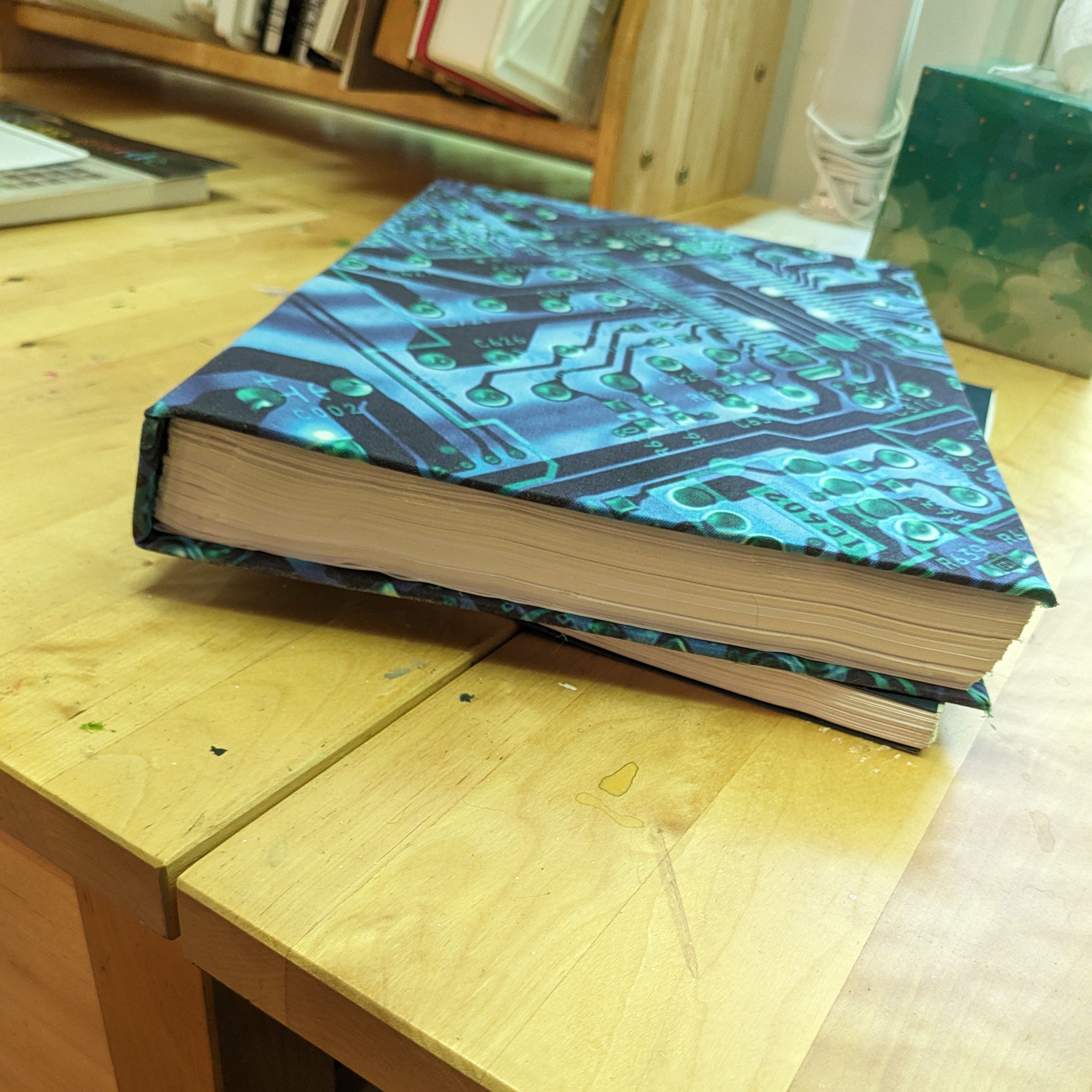
Paper and highlighters. If I can’t use the Scribe for some reason, then I consider printing the book out and using highlighters. This isn’t a complete waste for me, because I’ll often bind the book into a format that can sit on a shelf.
Flags and highlighter tape. If all I have is a physical copy of the book, I’ll fall back on flags, transparent sticky notes, and highlighter tape. No, I can’t just read the book, okay?
Method
Note: This is the method that works for me. It’s not perfect, but it’s what works for the time and attention levels I have.
I skip stuff. I totally skip anything that I’m likely to go into depth on later.
- Feats: If I’m GMing, these are rarely something I have to consider. If I’m playing, I’ll look at the ones that apply to the character I’m building in the moment.
- Spell lists: As a GM, I’ll use spells, but I can hold off reading them until I’m planning for a session.
- Stat blocks: I do read bestiaries, but mostly for the flavor. I skip stat blocks until I’m going to actually use a creature.
- Equipment lists: Again, these are rarely something that I need to know about until I’m actively planning for a game or running a character.
There’s a few benefits to skipping all of these for me. First, it makes the books go by a lot faster. In crunchy systems, tables of gear and spells can take up a significant amount of the page count. Second, it gives me something that I can look forward to discovering later! I love leveling up and combing through spell lists to find cool options I’d never seen before. If I already know all the options, it can start to feel a bit boring.
I dive deep elsewhere. Of course, I pay close attention to the general rules, but some sections, I’ll really hone my focus, even breaking out stickies or a notepad if need be.
Combat is a big one to read carefully for me, since what players do in the first combat can often end up set in amber. I’m not shy about correcting rules we read wrong, but human behavior is weird. It can take a while to get them out of the habit of thinking they can totally do X each turn.
I also like looking carefully over subsystems, but for a different reason: They don’t come up that often if you don’t know about them! That sounds obvious, but seriously, it’s easy to put together combat and social encounters and then try to cobble more complex situations with a couple of random DCs. The designers put together something much cooler, though! Use it!
Also, I tend to read the GM-centric sections a few times. It’s tempting to skip them if you’re experienced GM, but for the love of all that’s good, please don’t. Every system has a different way of balancing itself, and it’s important to buy into that before the first die is rolled.
So, in short:
- Skip anything that’s just a long list (feats, spells, equipment)
- Read the general rules (So, how feats work, how spells work, how to buy equipment, etc)
- Read combat carefully so you don’t screw it up out of the gate
- Read the GM sections carefully so you understand the game philosophy
Imma repeat that caveat
This is the system that works for me. I’m more than happy to skip certain sections, but if reading them brings you joy, you do you. If you’re not planning on ever GMing, you can totally skip the GMing sections! If you prefer to learn combat by watching a bunch of videos, have at it. I’m only putting what I do out there because I get asked from time to time, and I got tired of writing out the same reply over and over.
 Katie Plays Games